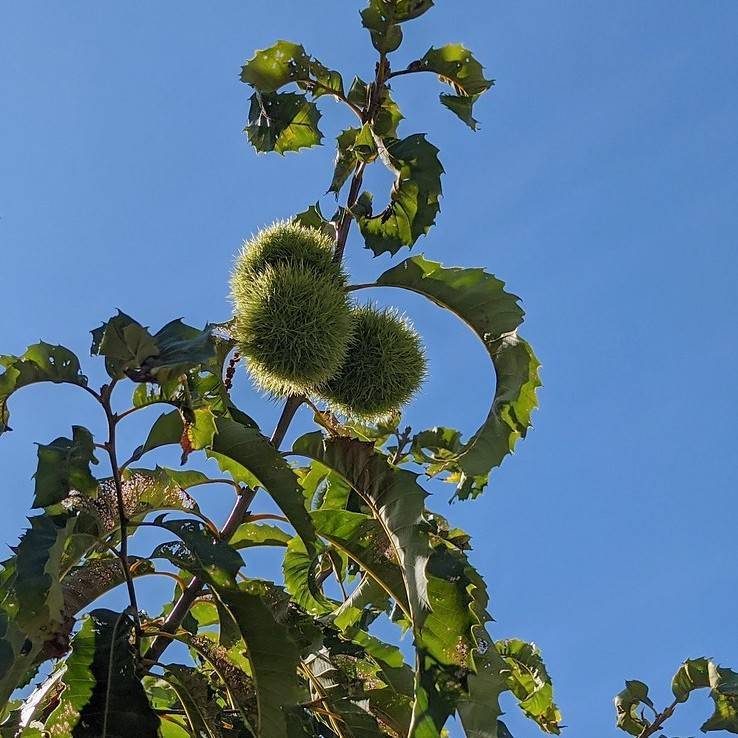
American chestnut
Castanea dentata
Overview
The American chestnut (Castanea dentata) is an amazing species of tree for many reasons. It was once one of the most abundant trees in the Eastern United States, covering an estimated quarter of all forests. Not only is this tree extraordinary for its historical range, it is also unbelievably fast-growing, up to ten feet per year, and when mature can reach a height of up to 120 feet. The American chestnut is recognizable by its shaggy bark and its fruits, which are edible nut-like ”chestnuts.” This tree is a vital source of food and shelter for wildlife and is considered an ”ecological keystone species” due to the significant role it plays in the regional ecosystem. The American chestnut is truly an iconic species and a sight to be admired.
Care Guide
Watering
American chestnut (Castanea dentata) plants should be watered approximately twice each week, and enough water should be given to keep the soil moist at a depth of 6-8 inches. Watering should be done in the morning to ensure that the plants can dry completely during the day. During the warmer months, ensure that the plants receive 1-2 inches of water per week. During the winter months, it is best to reduce watering to once every 2 weeks or less, depending on the weather.
Light
American chestnut (Castanea dentata) requires full sun to thrive and produce its edible nuts. While young plants need some protection from the hot afternoon sun, full sun exposure throughout the day is best for chestnut trees that have reached maturity. This species typically does best in southern climates where it isn’t exposed to long periods of cold temperatures. In northern climates, the tree may need to be planted in a more sheltered spot. Additionally, this species may need up to 10 hours of sun per day for optimal growth and production.
Soil
Sand
Temperature
Hardiness zone 5-8.
Pruning
American chestnut (Castanea dentata) should be pruned during the early spring, before major growth begins, or in the later summer after fruiting has ended. Pruning should be light and consist mainly of removing dead and damaged branches. As American chestnut is a large-growing tree, it is generally not necessary to prune for shape or size. Cutting back large branches may result in decay and weak growth. Where necessary, light thinning of the canopy or removal of suckers from the base of the trunk may be required.
Propagation
Grafting Propagation, Cutting, Air Layering Propagation, Tissue Culture, Root Suckering
Uses & Symbolism
Attracts: Squirrels, Birds.
Related plants
Other plants you might like if you grow American chestnut.