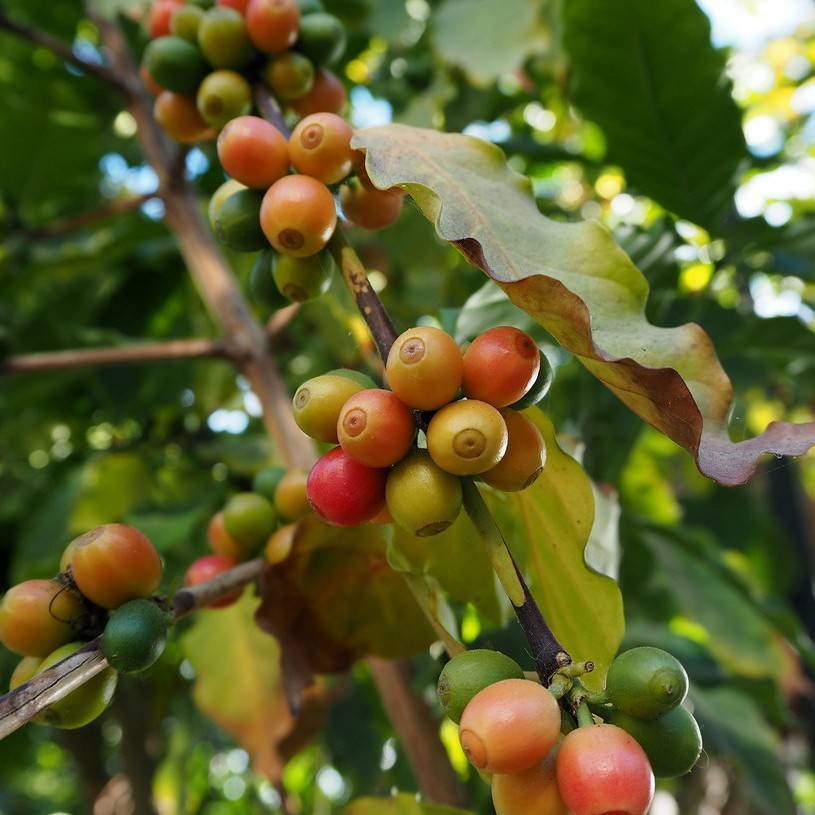
Arabian coffee
Coffea arabica
Overview
Arabian coffee (Coffea arabica) is one of the most amazing and popular coffee plants in the world. Grown primarily in Arab countries such as Yemen, Ethiopia, Somalia, and Saudi Arabia, Arabian coffee is renowned for its complexity of flavors and aromas. It has a unique flavor profile that is described as earthy, nutty, and mild with a hint of caramel, chocolate, and sugary sweetness. This coffee also has a smooth body that contributes to its amazingly delicious cup of joe. On top of its great taste, Arabian coffee contains more caffeine than other species of coffee. For those who love a strong cup of coffee, this is an amazing varietal to try.
Care Guide
Watering
Arabian coffee (Coffea arabica) should be watered deeply and thoroughly when the soil feels slightly dry, usually about once a week. It is important to allow the top part of the soil to dry out between waterings so as to avoid overwatering. If the plant is outdoors, check soil moisture before watering as rainfall can affect frequency of watering. During the cooler months when the plant is not actively growing, reduce the frequency of watering. It is best to always err on the side of allowing the soil to dry out slightly between waterings.
Light
Arabian coffee (Coffea arabica) plants prefer bright indirect sunlight, such as that found near a south or west window. They should be exposed to 6 to 8 hours of sunlight each day, of which 3 or more hours should be direct. Ideally, the plant should be exposed for the majority of sunlight hours between 8 am and 4 pm, as they need the intense direct light for optimal growth. It can still perform well in more shaded areas with less direct sunlight, but the foliage may become sparse and the plants will not bloom prolifically.
Soil
Well-drained
Temperature
Hardiness zone 10-11.
Pruning
Arabian coffee (Coffea arabica) should be pruned once a year, usually in the spring once the danger of frost has passed. Pruning should remove all dead, weak and diseased branches, as well as any branches that cross or rub against each other. The amount of pruning depends on the size and age of the Arabian coffee plant. Older plants might need some aggressive pruning to encourage new growth, while plants that are young might not need any pruning at all. Regular pruning also helps to keep the plant’s shape and encourage prolific blooming.
Propagation
Seed Propagation
Diseases & Pests
Common pests: Mites, Scale insects, Thrips.
Related plants
Other plants you might like if you grow Arabian coffee.