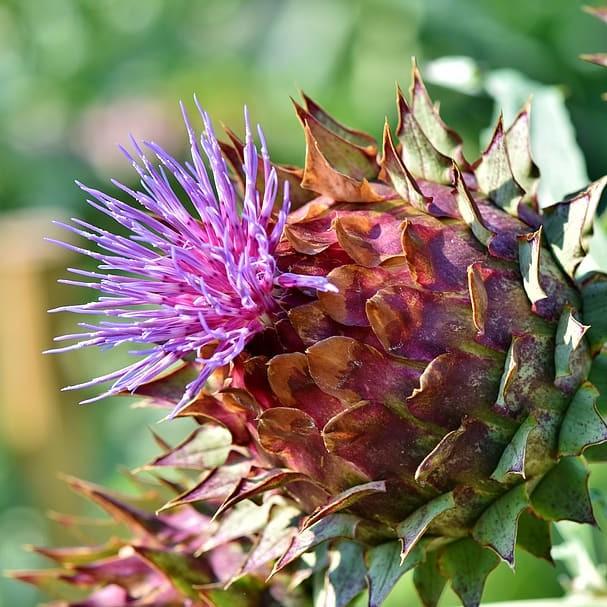
artichoke
Cynara cardunculus (Scolymus Group)
Overview
The artichoke (Cynara cardunculus (Scolymus Group)) is an amazing plant species with edible flower buds, which are packed with layers of deliciousness and sweetness. It has an impressive array of potential health benefits, including improved digestion, liver protection, and even potential cancer prevention. Plus, it's an excellent source of fiber, vitamins, and minerals like magnesium, potassium, and phosphorus. Its distinct flavor and unique texture make it a popular choice for soups, salads, and side dishes. And to top it off, artichoke plants are also easy to grow in your own backyard!
Care Guide
Watering
Artichokes need moist but not soggy soil and should be watered deeply. The best way to water is to give the plant a deep watering once or twice a week, depending on the weather. During periods of very hot, dry weather, you may need to water more frequently, but adjust accordingly as over-watering can cause the plant to become stressed and potentially rot. The easiest way to tell when to water is to feel the soil before you water. If the soil is dry, that's when your plant needs watering. However, to ensure your plant stays as healthy as possible, it helps to stick to a regular schedule.
Light
Artichoke (Cynara cardunculus (Scolymus Group)) grows best in full sun and should receive at least 6-8 hours of direct sunlight a day, but no more than 10 hours. The amount of sunlight they need varies throughout the growth cycle, with more sunlight during periods of active vegetative growth and flowering, and less direct sun during periods of winter dormancy and seed production. If your artichoke plants are grown in too much shade, they will become stunted and not produce as much foliage or flowers.
Temperature
Hardiness zone 7-10.
Pruning
When: Artichokes should be pruned in late winter or very early spring, when the plants are still dormant. How much: When pruning artichokes, always prune back 1-third of the plant’s height. Cut off any dead foliage and any shoots that have not budded. Cut off any flower buds that have started to form. Make sure to leave some healthy growth and don’t cut into the main stem or roots of the plant.
Propagation
Cutting, Division, Seed Propagation, Layering Propagation, Grafting Propagation
Related plants
Other plants you might like if you grow artichoke.