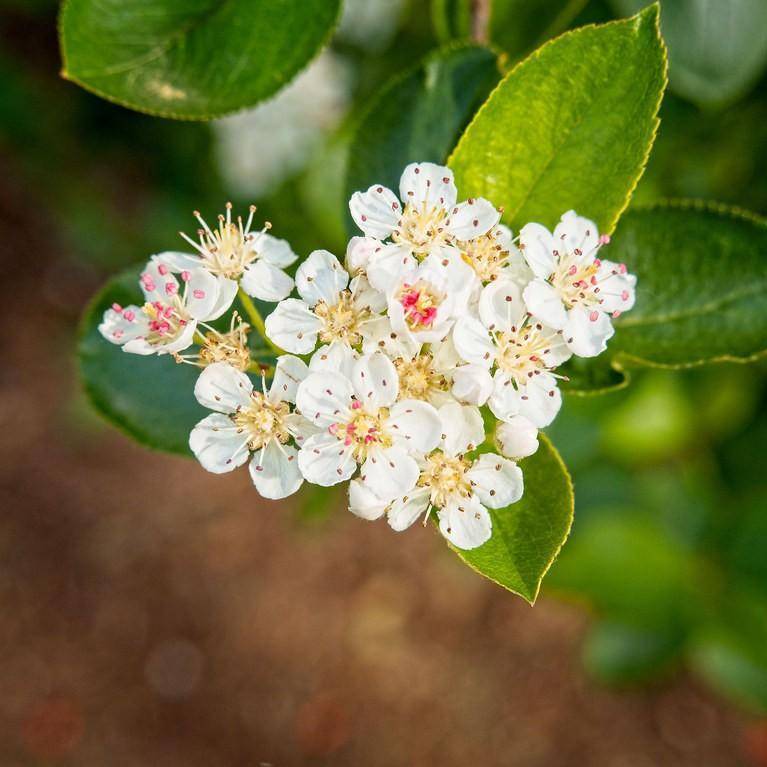
black chokeberry
Aronia melanocarpa
Overview
The black chokeberry (Aronia melanocarpa) is an amazing shrub native to North America, renowned for its amazing display of colors in the Fall. It bears dark green foliage in the summer, transforming into multi-hued colors of burgundy, crimson, and orange when Autumn arrives. Furthermore, the black chokeberry provides beautiful white flowers in the Spring, followed by sweetly tart black-purple berries in the Fall. Aside from its stunning ornamental value, black chokeberry's fruit is high in antioxidants and vitamins, making it an edible and healthful plant. All in all, the black chokeberry is a stunning addition to any garden, providing beauty and goodness.
Care Guide
Watering
Black chokeberry needs to be watered regularly in order to remain healthy and produce new growth. The most important thing to remember is to water your black chokeberry deeply but infrequently, allowing the soil to dry out between waterings. A good rule of thumb is to water every 3-4 days during the hottest months (April-October) and every 5-7 days during the cooler months (November-March). When watering, make sure to saturate the soil around the root zone of your plant and avoid over-saturating the root area. The amount of water required will vary depending on the conditions in your area, such as soil type, air temperature, wind, and sunshine. Generally speaking, your black chokeberry should receive about 1 inch of water each week. In order to ensure that your plant is receiving the proper water, you may need to check the soil on a regular basis to make sure it is neither too dry nor too wet.
Light
Black chokeberry should receive full sunlight for at least 6 hours each day for optimal growth. As this species naturally occupies moist, sunny locations, it is important to ensure it is located in a spot that receives ample sunlight. If grown in a container, as long as it is placed in a sunny, south-facing spot, it should receive adequate sunlight. Additionally, it can tolerate light shade and will still develop tasty, dark purple berries.
Soil
Sandy Clay Rocky
Temperature
Hardiness zone 3-8.
Pruning
Black chokeberry should be pruned in late winter or early spring before the buds begin to swell. Pruning this vigorous shrub should be done annually to maintain its shape and beauty, and to promote abundant flower and fruit production. Pruning should be fairly minimal; only dead or diseased branches should be removed, as well as any branches that cross over each other or are crowded. Prune back larger branches to the desired shape, but avoid cutting back branches more than 1/3 of their original size.
Propagation
Seed Propagation, Greenwood Cuttings, Greenwood Cuttings
Uses & Symbolism
Attracts: Birds.
Diseases & Pests
Common pests: Fungal leaf spot, Rust.
Related plants
Other plants you might like if you grow black chokeberry.