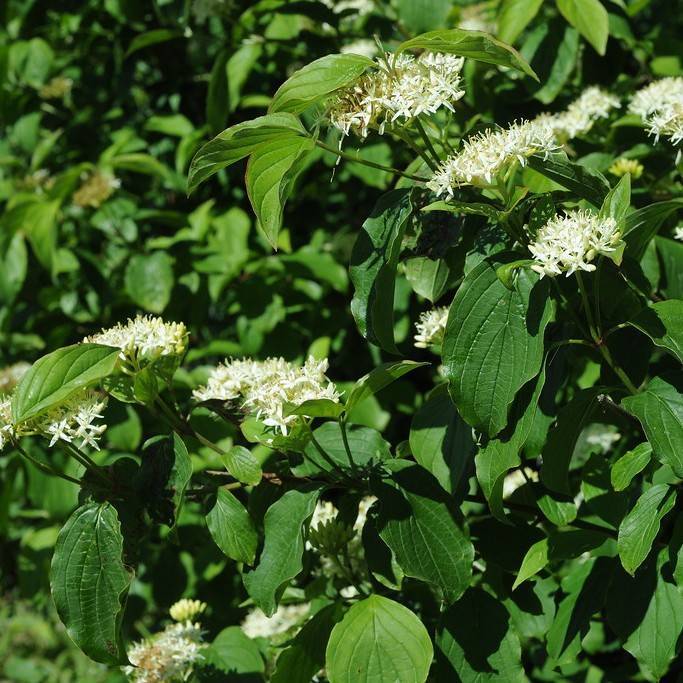
bloodtwig dogwood
Cornus sanguinea
Overview
The Bloodtwig Dogwood is a stunningly beautiful shrub that is sure to add an element of drama to any garden. Its distinctive bright red shoots make this an amazing specimen that stands out in the garden. This semi-evergreen shrub is also known for its small white flowers during mid May and beautiful pink and white leaves in autumn. The Bloodtwig Dogwood is hardy, and tolerant of most soil conditions. The remarkable thing about this species is that in the winter months its branches turn a deep red, making a perfect contrast against the snow. Seeing this magic turn into reality is truly an amazing experience.
Care Guide
Watering
Water Bloodtwig Dogwood regularly and deeply. During the growing season (May to October) give it 2 - 3 inches of water per week, either from rainfall or irrigation. During hot, dry spells, watering every few days is recommended. In the winter, rainfall is often enough, but if there is a long dry spell, 2 - 3 inches of water every 2 - 3 weeks should help it stay healthy. Be careful not to over water.
Light
Bloodtwig dogwood (Cornus sanguinea) grows best in full sunlight, at least 6 to 8 hours of direct sunlight per day, as well as partial shade. The best time of the day for sunlight exposure is between 10:00am and 3:00pm. During winter months, the sunlight requirement is less and can be reduced to as low as 4 hours of direct sunlight during the day. This plant species requires full sunlight exposure during the blooming season, which typically happens in spring and fall.
Temperature
Hardiness zone 4-7.
Pruning
Bloodtwig dogwood should be pruned annually in the spring. During this time, only remove dead, broken, or diseased branches and trim any wayward shoots. Avoid pruning more than 25 percent of the plant’s total growth in order to keep it vigorous. Moderate pruning should be used for forming a hedge or accenting. Be sure to use sharp pruning shears to ensure clean cuts.
Propagation
Cutting, Layering Propagation, Grafting Propagation, Division, Seed Propagation
Uses & Symbolism
Attracts: Birds, Butterflies.
Related plants
Other plants you might like if you grow bloodtwig dogwood.