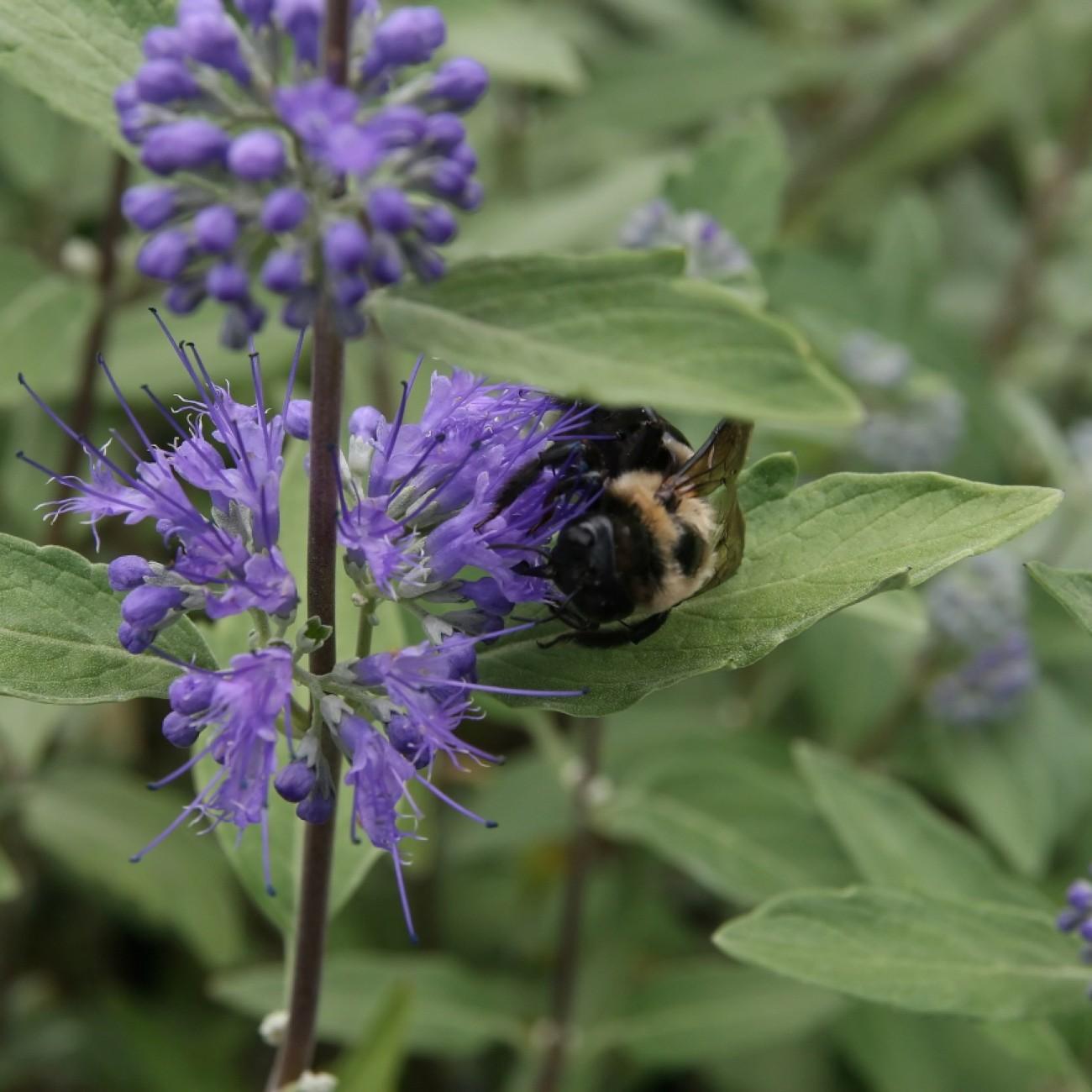
bluebeard
Caryopteris clandonensis 'Arthur Simmonds'
Overview
Bluebeard (Caryopteris clandonensis 'Arthur Simmonds') is an incredible garden plant. Its deep purple-blue flowers contrast beautifully with its light green foliage for an eye-catching look that won't go unnoticed. It blooms from mid-summer to fall, providing your garden with a must-have look for months to come. Not to mention, this plant is versatile and deer resistant – making it a great choice for any landscape. Its long-lasting clusters of flowers attract pollinators like butterflies and bees, which in turn will make your garden even more alive and vibrant. Its drought tolerant characteristics also make it an easy-care plant for any garden. This hard-to-beat plant is definitely one to have in your landscape.
Care Guide
Watering
Watering: Bluebeard (Caryopteris clandonensis 'Arthur Simmonds') should be watered on a regular basis, especially during dry times. Aim to provide this plant with 1-2 inches of water per week, either from rain or irrigation. It’s best to water the plants deeply, allowing water to penetrate the entire root system. Apply water in the morning to allow the foliage to dry off before nightfall so that the plant does not suffer from fungal diseases.
Light
Bluebeard (Caryopteris clandonensis 'Arthur Simmonds') plants thrive in full sun to get the most out of their light requirements. They should receive at least 5 hours of direct sun per day and up to 8 or more hours in the summer months. Bluebeard plants prefer to receive the most sunlight possible, so they should be planted in a spot that receives full sun throughout the day. In addition, Bluebeard plants benefit from afternoon shade in warmer climates, as this helps to ensure the plant gets the optimal amount of sunlight without becoming heated or stressed.
Temperature
Hardiness zone 5-9.
Pruning
Pruning should take place in early spring when the plant begins to bud, and should be done lightly. The goal of pruning is to maintain a natural silhouette, so remove any dead, damaged, or overcrowded stems and shoots, up to approximately 1 third of the current growth. This will encourage bushier new growth and promote flowers for the summer months. It is also important to remove any suckers (shoots sprouting from the roots) and thin out crowded branches so that air and light can reach the center of the plant. Avoid heavy pruning as bluebeard may become leggy after this type of removal.
Propagation
Cutting, Layering Propagation, Division, Grafting Propagation
Uses & Symbolism
Attracts: Butterflies.
Related plants
Other plants you might like if you grow bluebeard.







