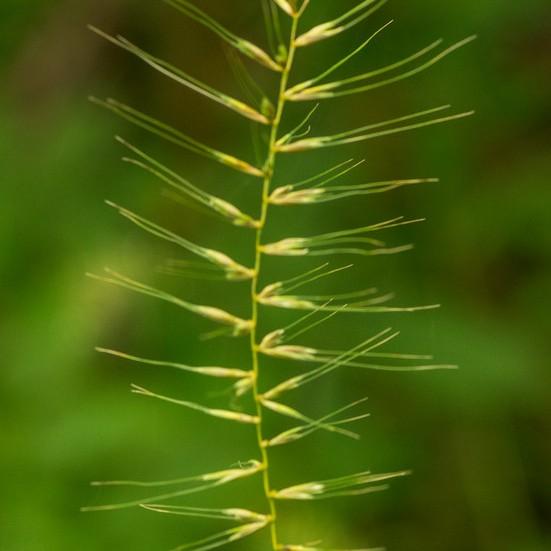
bottlebrush grass
Elymus hystrix
Overview
Bottlebrush grass (Elymus hystrix) is an amazing species to add to your garden. It is extremely hardy and can survive in both dry and wet soils. Its foliage is lush and arching, with strong stems and foliage that can grow up to a foot tall. Its foliage forms a dense clump that is an attractive addition to any landscape. In the summer, it is topped with stunning purplish-brown flower spikes giving the area a unique pop of color and texture. This beautiful grass is also a drought-tolerant species, requiring minimal care and maintenance and it’s also deer-resistant. With all these great features, bottlebrush grass is the perfect choice for a low-maintenance, attractive addition to any garden.
Care Guide
Watering
Bottlebrush grass should be watered once or twice a week, depending on weather conditions. If it is hot and dry out, water more often; if it is cooler and wet, water less often. The amount of water should be generous and should soak the soil to a depth of 6 inches (about 15 cm). This will encourage deep root growth and ensure the plant has enough water for a long time. During hot summer periods, water can evaporate quickly so increase watering frequency to prevent stressful dry spells. Do not water the leaves as that can increase the chance of disease.
Light
Bottlebrush grass (Elymus hystrix) prefers full sun and should receive between 6 and 8 hours of direct sunlight each day for optimal growth. This species does best in an area that is sunny and free from shade for the majority of the day. If possible, the grass should be exposed to sunlight throughout the day so that it can photosynthesize and produce essential products necessary for growth and flowering. During the summer months, bottlebrush grass will appreciate additional sunlight and will flower more abundantly with greater exposure. In winter months, however, providing the grass with some shade from the harsh elements can be beneficial.
Temperature
Hardiness zone 5-9.
Pruning
Bottlebrush grass (Elymus hystrix) should be pruned in late fall or early spring before it goes dormant. Pruning should not exceed 1 third of the plant's height or the oldest and tallest stems. This helps maintain the size of the grass and encourages new growth. For best results, use sharp shears or hedge clippers and prune only the top parts of the growth. To prevent disease, do not prune toward the center of the plant, but cut the stems off at their base. After pruning, rake away any dried stems and leaves.
Propagation
Division, Seed Propagation, Cutting, Layering Propagation
Uses & Symbolism
Attracts: Birds.
Related plants
Other plants you might like if you grow bottlebrush grass.