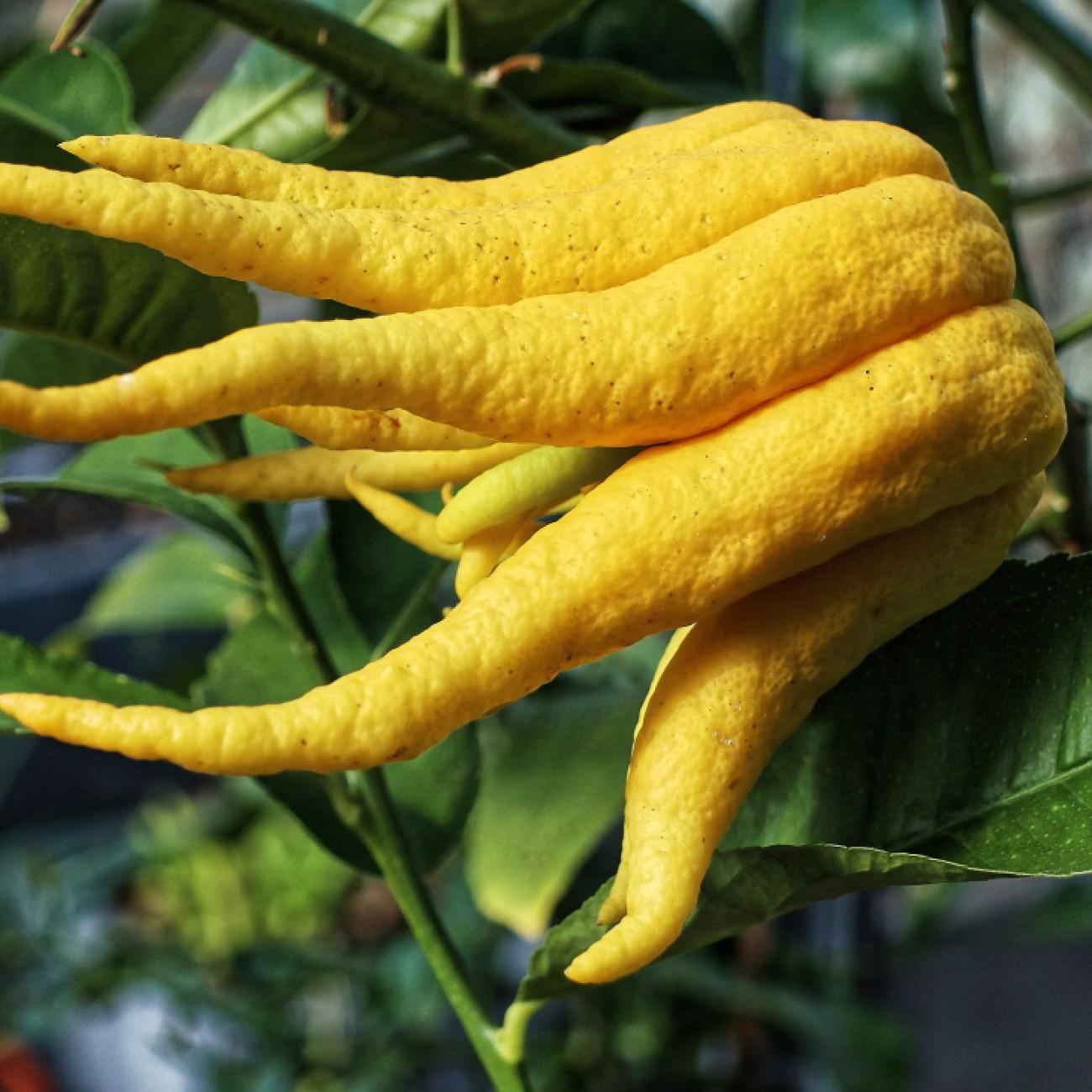
Buddha's hand
Citrus medica var. sarcodactylis
Overview
Buddha's hand (Citrus medica var. sarcodactylis) is an amazing source of fresh citrus flavor and aroma. It has unique finger-like shapes and grows abundantly in Asia and California. It is said that this tantalizing fruit brings fortune and happiness. Not only this, its delicious fragrant oils and zest can be used in various recipes and drinks to add an interesting twist. The fruit can be candied, dried, and preserved for a lasting sour touch to confectionaries, salads, and sauces. Plus, it has wonderful health benefits, including anti-inflammatory, anti-fungal, and antiviral properties. Crazy citrus lovers, don't miss out on this exotic plant!
Care Guide
Watering
When watering a Buddha's Hand (Citrus medica var. sarcodactylis) plant, it's important to water it regularly and deeply. Try to water it every week or 2, thoroughly saturating the soil until it is evenly moist. Let the soil slightly dry out before watering again. Never let the plant sit in water for longer than 20 minutes or the roots may rot. During the winter months, cut back on watering significantly. This citrus plant should only be watered when the soil has become completely dry between waterings.
Light
Buddha's hand, also known by its scientific name Citrus medica var. sarcodactylis, typically requires full sun at least 6 to 8 hours each day. It prefers temperatures between 55 and 85 degrees Fahrenheit (13-29 degrees Celsius). In cooler climates, partial shade or a south-facing outdoor area is recommended in order to protect the citrus from frosts. If the temperatures drop lower than 40 degrees Fahrenheit, its fragrant flowers and fruit may be lost. The Buddha's hand is sensitive to over-watering, so care should be taken to water only when the soil is dry to the touch.
Temperature
Hardiness zone 10-11.
Pruning
Buddha's hand should be pruned annually in the late winter or early spring before the new growth begins. Pruning should involve removing dead, diseased, or damaged branches and selectively thinning out overcrowded areas to promote better air circulation. In addition, older branches can be removed to allow for new growth. Pruning should be done gently and with the right tools to avoid causing damage to the plant. The stems should be cut back to within a couple of inches of the main trunk. Overall, pruning should be kept to a minimum to preserve the natural shape of the plant.
Propagation
Air Layering Propagation, Grafting Propagation, Cutting, Seed Propagation
Related plants
Other plants you might like if you grow Buddha's hand.