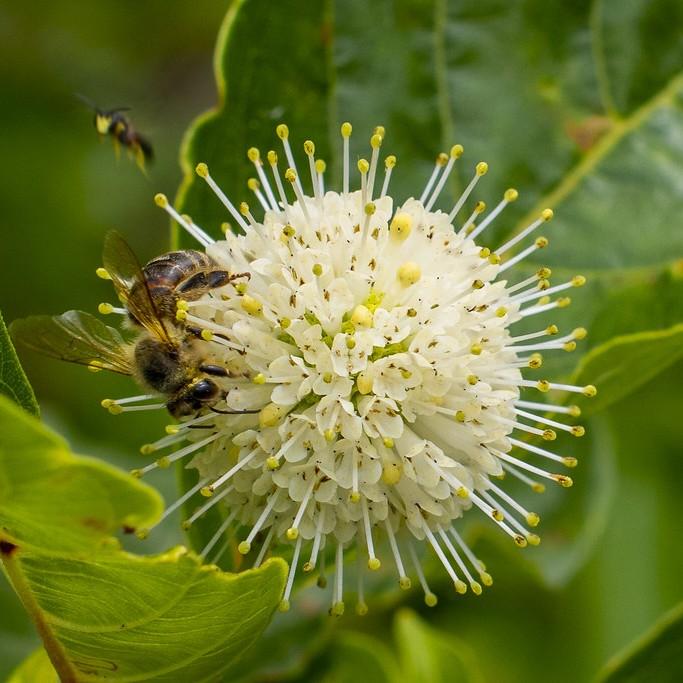
buttonbush
Cephalanthus occidentalis
Overview
Buttonbush (Cephalanthus occidentalis) is an amazing shrub species as it thrives in various types of soil and is highly adaptable to different landscape settings. It’s an extremely attractive plant with its round, fragrant clusters of white flowers and bright green foliage which turns shades of yellow and red during fall. This native North American plant is extremely low-maintenance as it doesn’t require pruning or special fertilizers and is also easy to propagate by taking cuttings of stems. It’s an excellent insect repellent for mosquitoes and other pests and attracts birds and butterflies. It’s an ideal choice for gardeners looking to add some diversity to their gardens.
Care Guide
Watering
Buttonbush should be watered once every week to 10 days. The amount of water used at each watering should be enough to thoroughly saturate the soil, as this plant likes moist soil and will not tolerate being wet for extended periods of time. When watering, ensure that the soil is evenly moist throughout the plant's root zone, which should be about 8-10 inches deep. It is important not to over water the plant, as this can be detrimental to growth. If the soil doesn’t drain well, water less often but in greater amounts.
Light
Buttonbush prefers full sun to part shade, but can tolerate some shade if needed. It will do best in 8 to 12 hours of direct sunlight per day, although it will still survive in less than 6 hours. During peak summer heat, it should be provided with some afternoon shade or filtered sunlight to protect it from harsh direct sunlight in the late afternoon and evening.
Soil
Sandy Loamy Clay Humus Rocky
Temperature
Hardiness zone 5-9.
Pruning
Buttonbush, a deciduous shrub, should be pruned during its dormant season. This is typically during late winter to early spring, before growth begins. First, dead or damaged branches should be pruned out, and light overall pruning may be done to maintain a desired shape or size. It may be necessary to moderately prune dead or overgrown branches to encourage new growth. For rejuvenation purposes, older stems can be carefully cut back to ground level. Buttonbush responds well to pruning and does not require heavy pruning. Pruning should be done with care in order to maintain the natural structure and attractive appearance of the shrub.
Propagation
Cutting, Grafting Propagation, Layering Propagation, Division, Seed Propagation
Uses & Symbolism
Attracts: Hummingbirds, Butterflies.
Related plants
Other plants you might like if you grow buttonbush.







