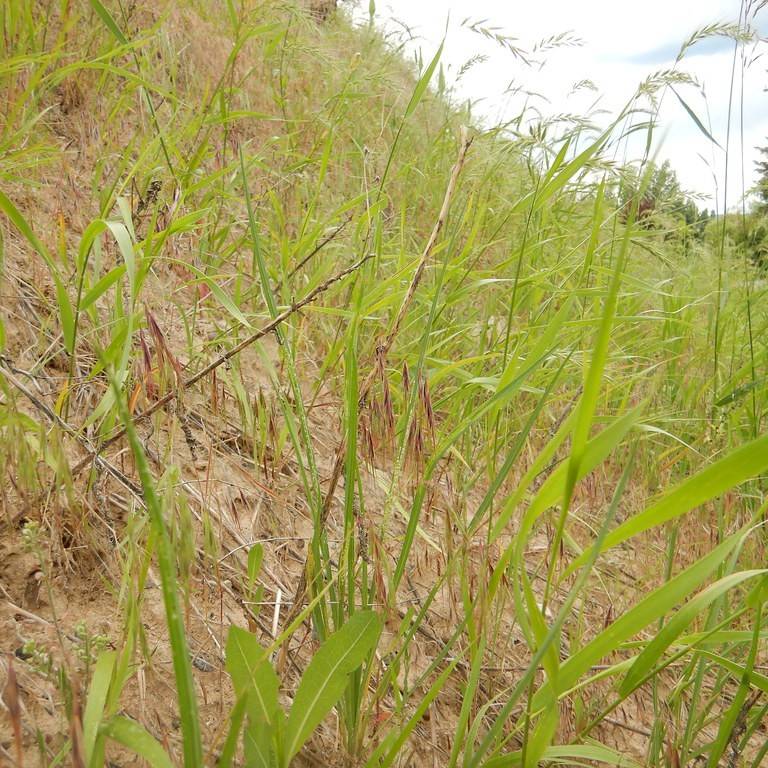
Canada wild rye
Elymus canadensis
Overview
Canada wild rye is an amazing native grass species that is not only rugged and hardy, but also beautiful. It is native to much of Eastern and central Canada, with a range stretching from Alberta to Ontario, and east to the Atlantic Provinces. Canada wild rye is an excellent choice for conservation and restoration projects since it is drought tolerant and grows well in dry, acidic soils. It produces tall, graceful inflorescences that are often seen in prairies and meadows, and its seedheads can attract gorgeous birds such as the Bobolink. Canada wild rye is also great for erosion control, making it a much needed native grass in many places.
Care Guide
Watering
Canada wild rye requires moist soil to grow and should be watered regularly as needed. In general, water the rye until its soil is moist to the touch, but not soggy. Water the plant early in the morning or later in the evening. This will help reduce evaporation and will ensure that the plant receives adequate hydration. Furthermore, water the plant deeply to encourage strong root growth. Make sure to keep an eye on the soil moisture to ensure the plant is getting enough water. If the soil begins to dry out, then water the plant again as soon as possible.
Light
Canada wild rye typically thrives in full sunlight or partial shade, but prefers at least 6 hours of direct sunlight each day. It does best in a spot that is sheltered from strong winds, as the long stems and thin leaves may be easily damaged in a windy environment. This species of wild rye can also tolerate short periods of drought, making it a good choice for areas with periods of dryness.
Soil
Sandy Loamy Clay
Temperature
Hardiness zone 3-8.
Pruning
Canada wild rye should be pruned when the plant starts to look overgrown or has gotten too tall in comparison to other nearby plants, usually at the end of its flowering period in late summer. Pruning should be completed in late summer or early fall, after the plant has finished flowering and gone to seed. Pruning should be limited to the removal of dead or diseased shoots, overgrown or crowded branches, and a minimal removal of foliage in order to encourage air circulation. Never remove more than a third of the total foliage at 1 time. When completed, the Canada wild rye should be left with an evenly distributed shape that is slightly wider at the base and narrower at the top.
Propagation
Seed Propagation, Division, Root Cutting, Layering Propagation
Uses & Symbolism
Attracts: Birds.
Related plants
Other plants you might like if you grow Canada wild rye.