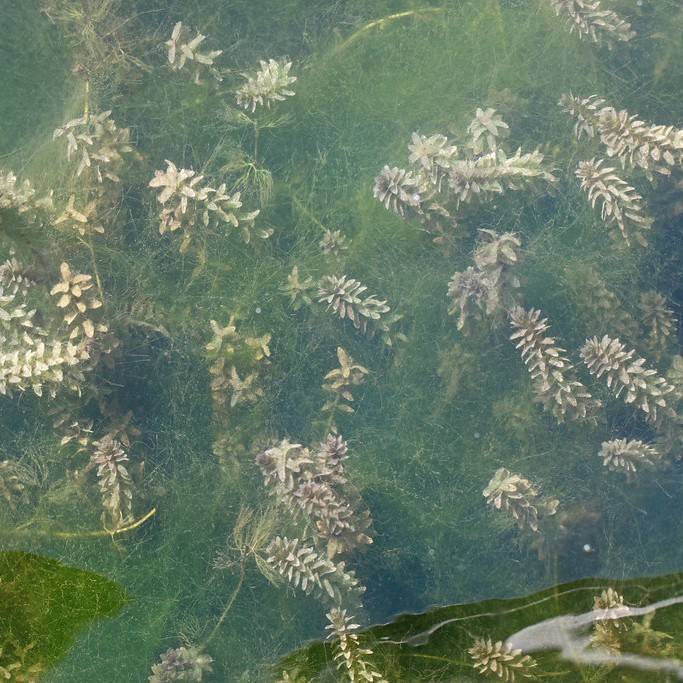
Canadian pondweed
Elodea canadensis
Overview
Canadian pondweed (Elodea canadensis) is a truly remarkable aquatic species. It is a hardy and versatile plant, flourishing in both warm and cold climates as well as a variety of water depths. Its wide-reaching, paddle-shaped leaves filter out pollutants, creating a cleaner, healthier environment for all aquatic life. Additionally, its fibrous root structure tunnels deep into the riverbed, stabilizing the ground and helping to prevent shoreline erosions. The rapid growth of Elodea canadensis also provides great cover and food for fish and other aquatic animals, making it an invaluable species to many natural aquatic ecosystems.
Care Guide
Watering
Water Canadian pondweed (Elodea canadensis) twice a week. The water should not be too deep and should only be enough to cover the soil or substrate. If the plant is in a water tank or aquarium, it should be provided with between 2 to 4 inches of water. Canadian pondweed should be watered every 3 to 5 days with a large amount of water for vigorous growth.
Light
Canadian pondweed (Elodea canadensis) prefers sunlight for at least 6-8 hours per day. This plant does best when it is exposed to both direct sunlight and bright indirect sunlight. When these plants receive too much direct sunlight, their leaves may become scorched. Therefore, it is best to provide this plant with filtered sunlight throughout the day. In general, it is best to keep Canadian pondweed in an area that receives ample amounts of sunlight, and provide shade during the hottest times of the day, such as midday.
Temperature
Hardiness zone 4-10.
Pruning
Canadian pondweed (Elodea canadensis) should be pruned once a year, usually anytime from late spring to early summer, with a systematic approach of removing around 1-third of the stems at a time. To do this, start at 1 end of your pond, and carefully cut stems at their base using sharp, clean shears or scissors. As you work your way around the pond, make sure the ends of the cut stems are submerged in the water in order to prevent them from decaying anywhere other than underwater. By removing stems you can control the spread of this aquatic plant and even reduce it if desired by cutting to the root in thin areas. This will promote healthy growth on the remaining stems and make the pond look more balanced.
Propagation
Sexual Reproduction, Asexual Reproduction, Fragmentation, Tissue Culture, Budding, Asexual Reproduction
Related plants
Other plants you might like if you grow Canadian pondweed.