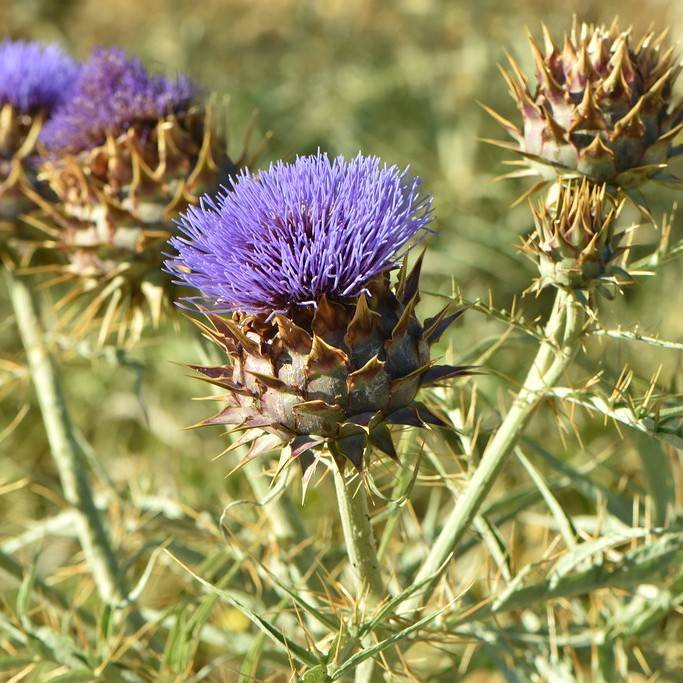
cardoon
Cynara cardunculus
Overview
The cardoon (Cynara cardunculus) is an amazing plant species with many unique characteristics. It is native to the Mediterranean and can grow up to six feet tall! It has large, spiny leaves and an edible stem that are both juicy and sweet. It is a great source of Vitamin E and dietary fiber and is used in dishes across Europe and parts of the Middle East. Its leaves and stems can also be used as a natural dye, making it a useful plant for its ornamental value as well. Its flower heads provide nectar that attracts a number of different insect species and its leaves makes a great home for birds and small animals. The cardoon is truly an amazing plant species with something to offer everyone!
Care Guide
Watering
Water Cardoon plants deeply once a week in the morning. Allow the soil to dry out between watering; if the soil is continually wet, the plants will be more prone to disease. As the plant becomes established, you can reduce the frequency of watering, but adjust this depending on weather conditions. An immature plant needs more frequent watering, whereas an established plant can tolerate an occasional drought. In hot, dry conditions, water once a week and more often in hot, humid conditions. Keep the soil moist at all times and never allow it to dry out completely. Additionally, take care to avoid over-watering, as this can damage the plant’s roots.
Light
Cardoon (Cynara cardunculus) is a plant species which thrives best with consistent sunlight and warm temperatures. It prefers full sunlight in the morning hours and at least 6 hours of direct sunlight each day, but can tolerate some shade. When temperatures are cooler, Cardoon benefits from protection from the afternoon sun to avoid excessive drying. In very hot climates, midday sun protection is best for this plant species.
Temperature
Hardiness zone 7-9.
Pruning
Cardoon plants should be pruned in early spring before the new growth begins. Cut back any dead, diseased, or broken stems to promote healthy growth for the season. Remove any stems that have flowered and have gone brown. Thin out stems to maintain air circulation throughout the plant's foliage. Prune off roughly half of the older stems near the base of the plant back to the ground. This helps to encourage the growth of newer, healthier stems. If you desire a bushier plant then you can prune back less of the older stems. Lastly, use a pair of sharp pruners or scissors to trim the plants back to its desired height and shape.
Propagation
Seed Propagation, Division, Cutting
Diseases & Pests
Common pests: Rabbit resistant.
Related plants
Other plants you might like if you grow cardoon.