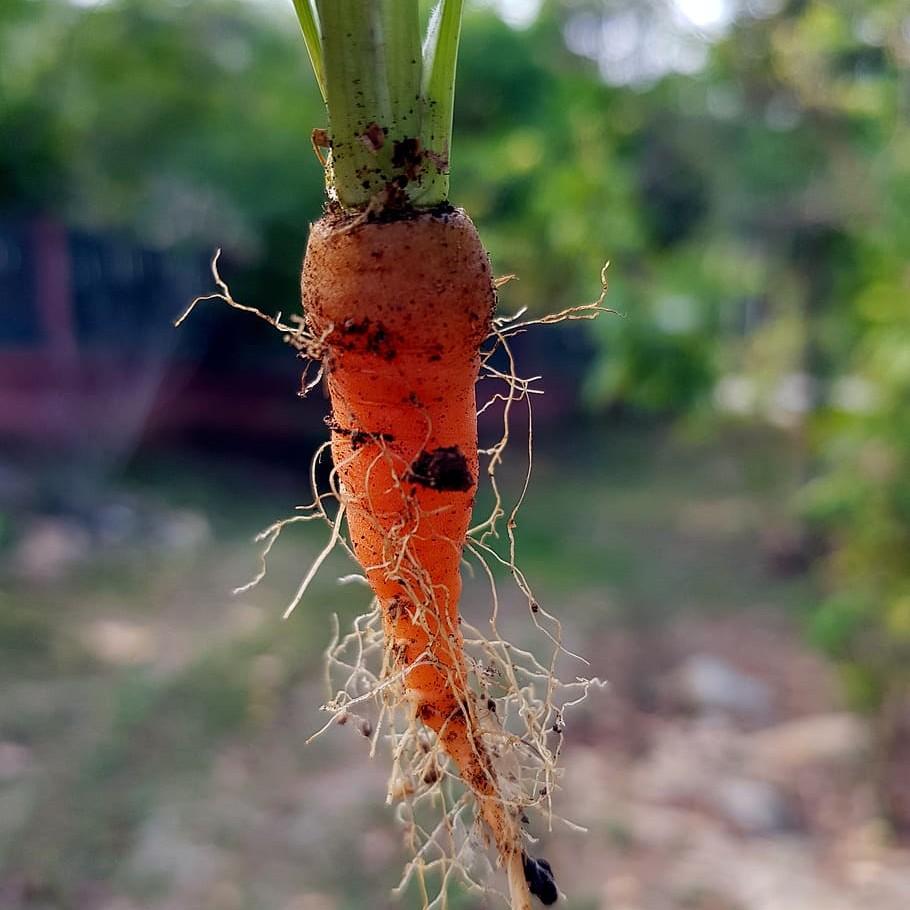
carrot
Daucus carota var. sativus
Overview
The carrot (Daucus carota var. sativus) is an amazingly versatile vegetable prized for its edible roots. With a sweet flavor, crunchy texture, and a myriad of uses, these delicious veggies are an essential part of many recipes. Rich in carbohydrates and minerals such as calcium, iron and magnesium, carrots are a nutritional powerhouse. They’re also packed with carotenoids, like beta-carotene, lutein, zeaxanthin, and lycopene, essential for eye health and a strong immune system. Plus, they’re low in calories, so they can make a great addition to any diet. Carrots are also easy to grow at home, making them an ideal choice for cooks looking to add more vegetables to their plate.
Care Guide
Watering
Carrots thrive in well-drained, loose soil. For optimal growth, water 1-2 times per week when the soil is dry to the touch. When watering, deeply soak the soil so that it is moist to a depth of 4-5 inches. Be very careful not to over-water. Too much water can lead to rotting roots, fungal growth, and even stunted growth. Rotate when and how you water your carrots, as wetter and drier cycles can help to encourage root formation.
Light
Carrot plants (Daucus carota var. sativus) require a minimum of 6 hours of sunlight each day to grow and thrive. The best time for sunlight is in the morning when the sun is at its brightest and warmest, as this will help the roots to absorb and distribute moisture through the plant. Carrot plants can also handle partial shade during the day, but should not be grown in complete darkness or heavy shade.
Temperature
Hardiness zone 2-11.
Pruning
The best time for pruning carrots is when the leaves become top-heavy or when they start to crowd out 1 another. The amount of pruning depends on the density of the planting. You should prune off the top half of the foliage to thin the plants to 1 plant per 4-6 inches of row. This will help to provide better air circulation and sun exposure as well as allowing for better development of the carrot’s root. Pruning should be done as often as necessary to maintain the desired spacing. A light pruning of the foliage in the springtime can also help to encourage quicker growth and larger yields
Propagation
Seed Propagation, Division, Grafting Propagation, Layering Propagation, Cutting
Related plants
Other plants you might like if you grow carrot.