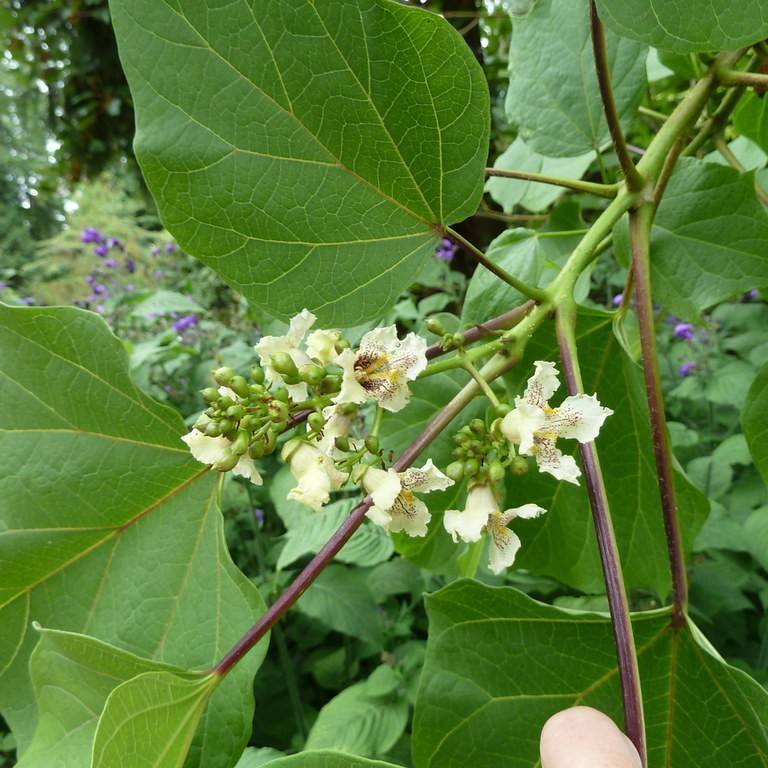
Chinese catalpa
Catalpa ovata
Overview
The Chinese catalpa is an incredibly amazing species of tree. It is renowned for its huge white blooms that form cascades of large panicles of flower. Its light and airy foliage creates a beautiful canopy of shade and its wood is renowned for its strength, making it a popular choice for furniture. Its bark has remarkable medicinal properties and its pods have a distinct nutty flavor, making them popular among wildlife. The Chinese catalpa is a gorgeous tree with numerous uses, making it a truly incredible species.
Care Guide
Watering
A Chinese Catalpa (Catalpa ovata) should be watered regularly throughout the growing season. For best results, water the plant once or twice a week, giving it a deep soaking each time. During periods of extreme heat or drought, the plant may need to be watered more often, while during cooler weather or periods of rainfall, it may need to be watered less often. Make sure that the soil is allowed to dry out slightly between waterings to ensure adequate aeration and drainage.
Light
The Chinese catalpa (Catalpa ovata) enjoys a moderate to full amount of sunlight when it comes to growing. This species of tree is particularly tolerant to the summer heat, and therefore can survive with full sun for much of the day. During the late spring and summer months, the Chinese catalpa needs at least 6 to 8 hours of direct sunlight throughout the day. In the winter, however, it will require a bit less sunlight since it is not actively thriving and growing in the colder months. It is important that this plant receives ample sunlight, as it helps its foliage remain fertile and results in lush, full growth.
Temperature
Hardiness zone 4-8.
Pruning
Chinese catalpa should be pruned from late spring or early summer (after flowering) when the plant is most dormant. For most trees, it is best to prune 1/3 of the main shoots each season, which will keep the tree from getting too large and thin out branches to increase air flow and decrease the potential for disease and insects. The remaining shoots should be cut to half their current length. It may also be necessary to selectively prune out any competing or deadwood branches and to thin some of the interior branches for better branching structure and air flow.
Propagation
Seed Propagation, Cutting, Grafting Propagation, Layering Propagation
Related plants
Other plants you might like if you grow Chinese catalpa.







