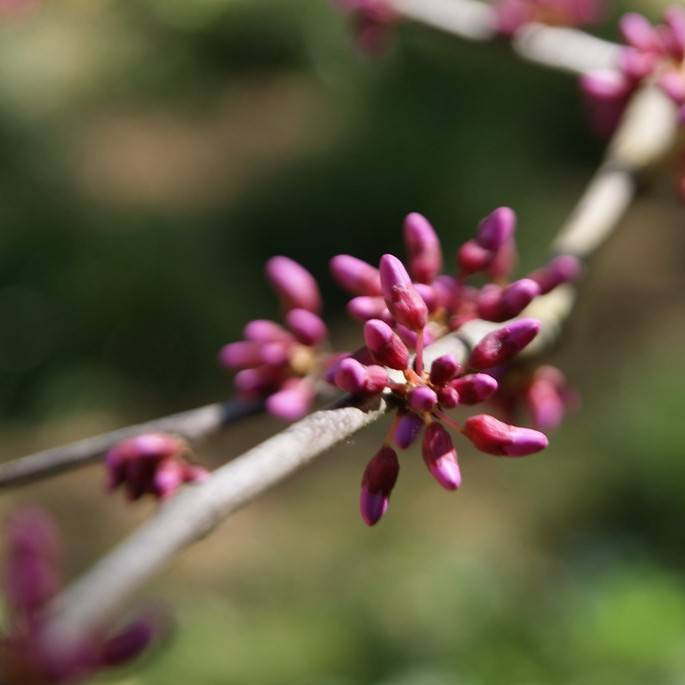
Chinese redbud
Cercis chinensis
Overview
Chinese redbud (Cercis chinensis) is an amazing plant species because of its hardy yet beautiful nature. It is a deciduous shrub or small tree, native to China but grown in many other parts of the world. Its deeply veined heart-shaped leaves turn yellow, orange, and red in autumn. During early spring, its branches become adorned with pea-sized dark pink flowers, making it one of the earliest flowering trees in bloom. They are also easy to care for and adaptable to various climates, making it a perfect addition to any garden.
Care Guide
Watering
Chinese redbud should be watered regularly to keep the soil slightly moist throughout the growing season. Water deeply once a week during the spring, summer, and fall months, or whenever the soil begins to feel dry. Reduce watering frequency as fall approaches and the temperatures begin to cool. During the winter months, when the plant is dormant, water only enough to keep the soil from becoming overly dry.
Light
Chinese redbud (Cercis chinensis) benefits from 6 to 8 hours of direct sunlight each day. In general, it should be placed in an area that receives full morning sun and partial afternoon shade to ensure the best growth. For the best results, place the plant in an area with direct sunlight where it can soak up maximum sun exposure in the morning and then be shaded during the hotter, mid-day and afternoon hours.
Temperature
Hardiness zone 6-9.
Pruning
Pruning Chinese redbud (Cercis chinensis) should be done in late winter or early spring, after the last frost, before new growth begins. Prunes should be limited to 1/3 of the plant's total volume at any 1 time. Remove stems with weak crotches, those that are crossing or rubbing, and suckers or watersprouts. If a more formal shape is desired, consider pruning the main stem up to 30-50 cm (12-20") above the ground. This will encourage the emergence of side shoots, creating a fuller rounded shape. However, be sure to maintain a living crown and not remove more than 1/3 of the total volume or foliage of the plant.
Propagation
Grafting Propagation, Cutting, Air Layering Propagation, Seed Propagation
Related plants
Other plants you might like if you grow Chinese redbud.