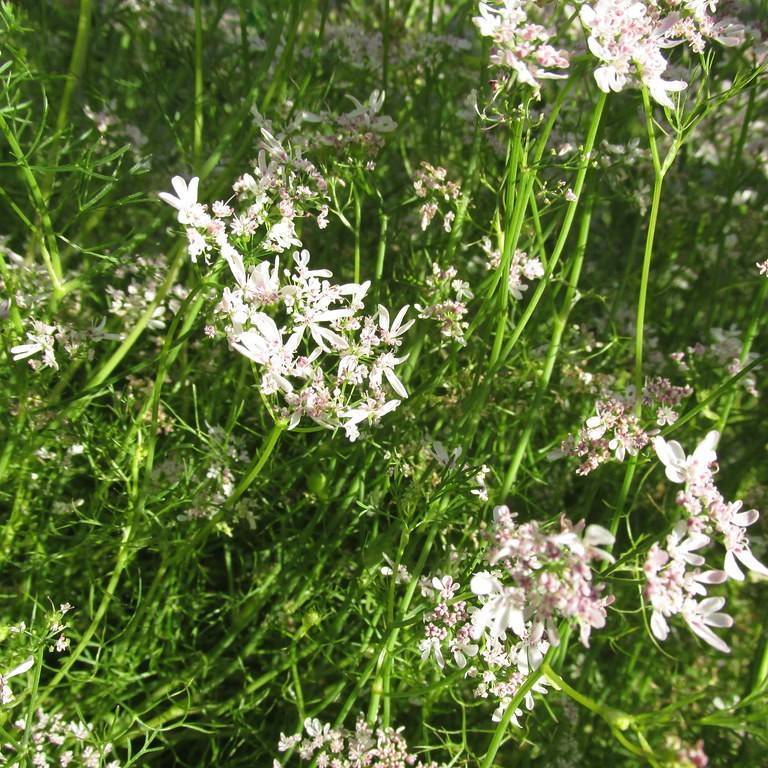
cilantro
Coriandrum sativum
Overview
Cilantro (Coriandrum sativum) is an amazing herb with many uses and benefits. Not only is it a popular ingredient in a variety of cuisines - from Thai to Mexican to Middle Eastern - but it is also used in medicine for centuries. Cilantro contains high levels of calcium, magnesium, potassium, zinc, copper and iron, making it a nutrient-rich addition to your diet. It also contains compounds that act as a natural pesticide, helping to repel insects. In addition to helping to ward off pests, cilantro is also believed to have antioxidant, anti-inflammatory and antimicrobial properties that help to protect against a wide range of health conditions. All in all, cilantro is an amazing herb that has a range of delicious uses.
Care Guide
Watering
Cilantro (Coriandrum sativum) requires regular watering to remain healthy and thrive. Water your cilantro about once a week, or whenever the top 1-2 inches of soil are dry. Water thoroughly, until water pours out the drainage holes in the bottom of the pot. Allow the soil to dry out slightly between waterings, and if in doubt, under-water rather than overwater. In hot, dry weather, cilantro may need to be watered more frequently.
Light
Cilantro (Coriandrum sativum) plants prefer full sunlight and enjoy warm temperatures. Ideally, cilantro plants should receive full sun for 8-10 hours per day. When the temperatures rise above 86-95°F (30-35°C), the plants should be shaded to keep them from wilting. Cilantro plants do not like direct afternoon sunlight and should be placed in a location that receives sun in the morning and filtered or partial sunlight in the afternoon. Additionally, cilantro plants should be protected from strong winds which can cause the delicate foliage to dry out and curl.
Soil
Well-drained
Temperature
Hardiness zone 2-11.
Pruning
Cilantro (Coriandrum sativum) is best pruned just as the plant begins to flower. This usually occurs 2-3 months after planting and should be done by trimming the stem just above the uppermost leaf set. Pruning in this way promotes bushier growth and increased leaf production, which cilantro is known for. You should be sure to regularly prune your cilantro to keep the plant vigorous and healthy. Aim to remove 1/3 of the foliage from the plant each time you prune. If too many flowers become visible, you may want to reduce the amount of pruning to keep the plant from going into seed production.
Propagation
Seed Propagation
Diseases & Pests
Common pests: Pest resistant, Disease resistant.
Related plants
Other plants you might like if you grow cilantro.