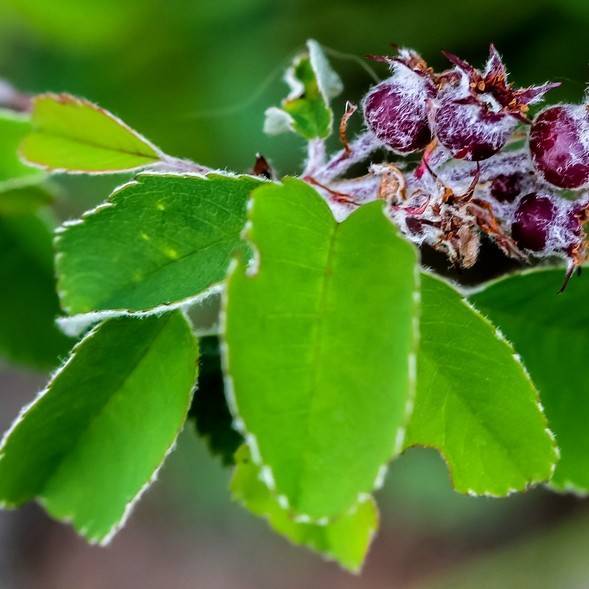
coastal serviceberry
Amelanchier obovalis
Overview
The Coastal Serviceberry (Amelanchier obovalis) is an amazing plant species for many reasons. Not only does it provide delightful white and pink flowers in the spring, but its edible fruits provide food for wildlife and humans too. It is also a hardy plant that can handle extremes of cold up to zone 4. Its easy to manage size and shape, allows coastal serviceberry to fit in many yard or landscape plans, while its attractive dark green foliage maintain interest throughout the summer and fall. Additionally, its smooth silvery bark adds winter interest and beauty. Coastal Serviceberry is an excellent choice for gardeners looking for a garden and wildlife friendly addition.
Care Guide
Watering
Coastal serviceberry (Amelanchier obovalis) requires moderate watering with adequate drainage. It should be watered once a week, with more during periods of extreme heat. The soil should be kept moist, but not overly saturated. Allow the top 2 inches of soil to dry out between waterings.
Light
Coastal serviceberry (Amelanchier obovalis) prefers full sunlight and is drought-tolerant. For optimal growth and flowering, ideally it should receive 6-7 hours of full sunlight each day either in the morning or the afternoon. During the growing season, it should receive about 8 hours of sun every day. In some climates, it may be better for it to receive some light shade if the temperature is too hot or the soil is very dry.
Temperature
Hardiness zone 5-8.
Pruning
Coastal serviceberry (Amelanchier obovalis) should be pruned in late winter or early spring (February or March) for best results. Prune lightly, removing no more than 1/3 of the previous years growth. Remove any dead, diseased, or damaged branches. Cut back long stems to the desired shape or reduce the overall size of the plant. Remove any low-growing shoots from the base of the trunk. This will promote better air circulation and allow light to penetrate the center of the plant. Do not prune too severely as this will reduce the amount of blooms the plant produces.
Propagation
Cutting, Grafting Propagation, Layering Propagation, Seed Propagation, Tissue Culture
Uses & Symbolism
Attracts: Birds.
Related plants
Other plants you might like if you grow coastal serviceberry.