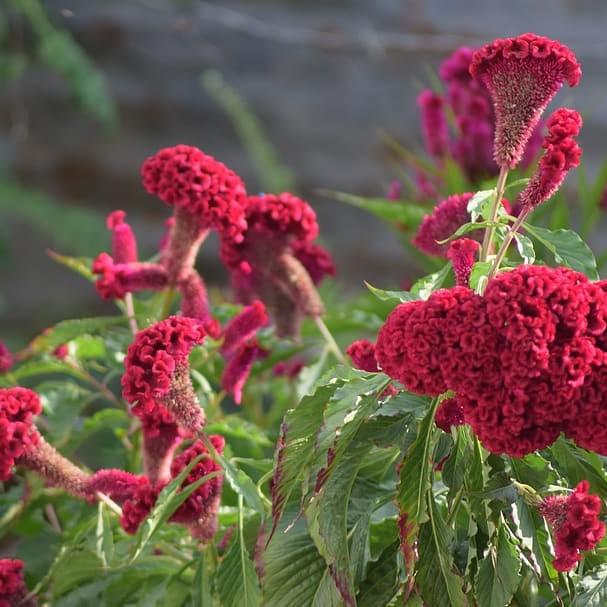
cockscomb
Celosia argentea var. cristata (Cristata Group)
Overview
Cockscomb (Celosia argentea var. cristata (Cristata Group)) is an amazing plant species that will brighten up any garden. It has beautiful velvety flowers that come in a wide range of bright and vibrant colors such as red, yellow, pink and white. The velvety flowers form on unusual crests that can reach up to 12 inches in diameter. Cockscomb is easy to grow and maintain, and tolerates both heat and drought. It's a great addition to borders and containers, and makes an ideal cut flower. A garden with cockscomb is sure to draw the eye and bring a smile to anyone's face.
Care Guide
Watering
Cockscomb (Celosia argentea var. cristata) requires moderate to heavy watering during the growing season. Water your cockscomb plants on a regular basis as soon as the soil starts to dry out. Aim to keep the soil moist, but never soggy or waterlogged. Water your cockscomb plants twice a week during the summer months and once a week when the temperatures begin to cool. Cockscomb plants also appreciate average humidity levels, so mist the plants regularly to increase the level of moisture around and on them.
Light
Cockscomb (Celosia argentea var. cristata) plants require full sun, meaning at least 6 hours of direct sunlight exposure each day to thrive. To ensure maximum growth and health, they should be planted in an area where they'll be exposed to direct sunlight most of the day, with some shade in the hottest parts of the afternoon. In USDA Hardiness Zones 9b to 11, cockscomb plants should be given full sun all day long; for those zones below 9b, partial shade is recommended during the hottest part of the day.
Temperature
Hardiness zone 2-11.
Pruning
For cockscomb, pruning should be done once a year, typically in late spring or early summer. To prune, start by removing dead or discolored stems and leaves. Then, cut back any long stems to a length of 5 to 8 inches for bushier, fuller growth. If you notice any stems that are twiggy and thin, you should also trim them back to a size of 2 to 3 inches. and remove any damaged, weak, or deformed stems. Lastly, tidy up the plant's overall shape by trimming back any stems that are protruding beyond the main body of the plant.
Propagation
Seed Propagation, Cutting, Division
Related plants
Other plants you might like if you grow cockscomb.