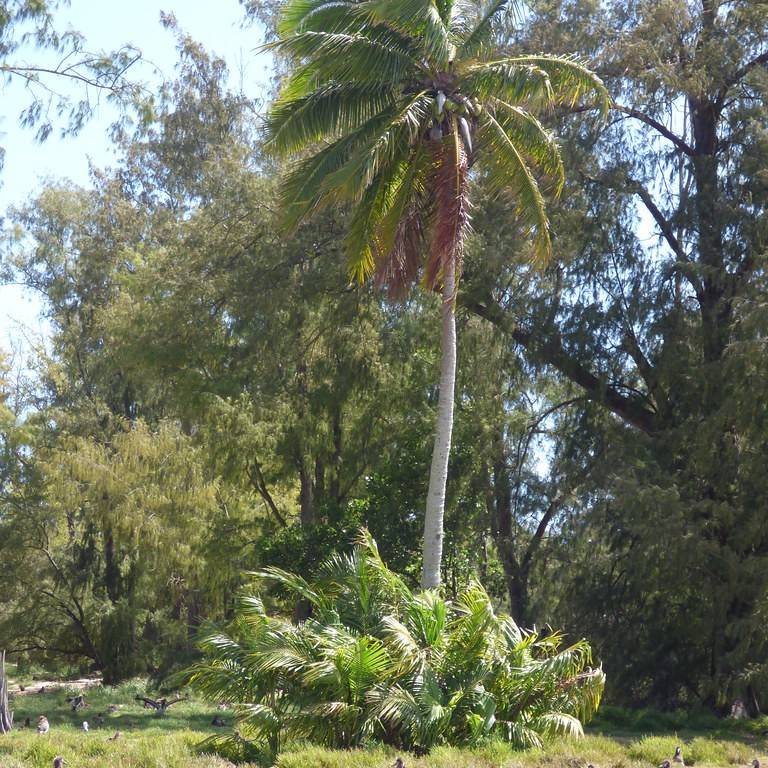
coconut palm
Cocos nucifera
Overview
The coconut palm (Cocos nucifera) is truly a wonder of nature. This palm tree can thrive in harsh environments and dry climates and produce delicious, nutritious fruits year-round. The wide range of uses for coconut palms is impressive; you can use the fruit for food, the oil for cooking, the leaves for weaving and construction, and the tree trunks for lumber. It is also an important source of food and income for many regions throughout the world. Plus, it requires minimal care, making it a great choice for gardeners with limited time on their hands. With so much to offer, it’s easy to see the coconut palm's immense appeal.
Care Guide
Watering
Coconut palms need about an inch of water every week. Water should be applied in the morning and allowed to penetrate the soil slowly. Withhold water if the tree's leaves are drooping. In areas with a moderate climate, allow the soil to dry out between watering. During the warm summer months, the tree may need to be watered more frequently. Protect from overwatering by checking the soil to see if it is moist or dry before adding water. In areas prone to cold winter temperatures, add mulch around the tree to help retain some of the moisture.
Light
Coconut palms require full sun in order to thrive. They prefer full sun for 8-10 hours per day, but can tolerate partial shade for part of the day. The coconut palm thrives in hot, tropical climates with abundant sunlight and humidity. In areas with cooler climates, the coconut palm can still grow, but may need more shade and shelter from the wind. In other temperate climates, the coconut palm must be kept in a greenhouse environment that provides full sunlight and adequate warmth and humidity for growth.
Temperature
Hardiness zone 10-12.
Pruning
For coconut palms, pruning should be done twice a year to keep the tree healthy and promote new growth. Pruning should be done in early spring and late fall. For young trees, it is recommended to prune every year for a few years. When pruning, remove any dead, diseased, or broken branches as well as any that are crossing other branches and growing towards the center of the tree. Additionally, remove any branches that are growing too far out from the main trunk. Doing so will promote stronger growth and will support a more symmetrical and uniform shape for the tree. In addition to regular pruning, coconut palms may require corrective pruning when the tree is young to shape it and when it is more mature to keep its shape.
Propagation
Seed Propagation, Air Layering Propagation, Budding, Grafting Propagation, Tissue Culture
Related plants
Other plants you might like if you grow coconut palm.