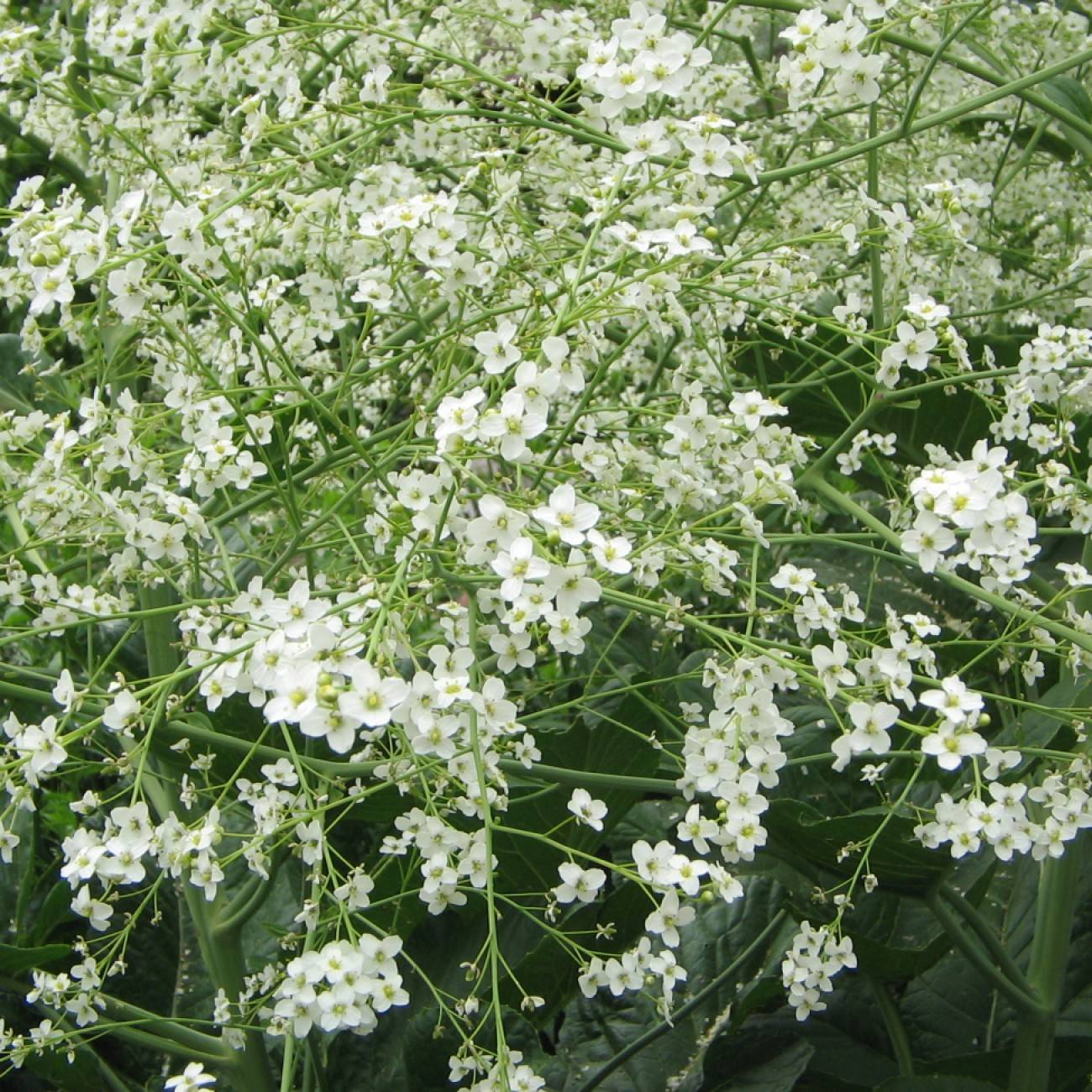
colewort
Crambe cordifolia
Overview
Colewort (Crambe Cordifolia) is an amazing plant species! Its upright, lobed leaves are thick and leathery, and its yellow flowers have blue centers – making it an eye-catching addition to any garden. It can reach up to 3 feet in both height and width, and its low-maintenance requirements makes it ideal for beginner gardeners and those with busy lifestyles. Not only is it tolerant of most climates, but it is also very drought-resistant. Its dense, woody clumps of stems makes it a great windbreak in exposed gardens and it is also good for coastal gardens. Its beauty is not just its aesthetic quality, but its uses and applications; its autumn seed heads make an attractive addition to flower arrangements. Its oil from the seeds is used for cooking and cosmetic applications!
Care Guide
Watering
Colewort should be watered regularly to ensure its roots stay adequately moist. Depending on your climate and the potting soil you're using, the Colewort may need to be watered once or twice a week. During times of warmer weather or intense sunlight, the Colewort may need more frequent watering. Use your finger to check the top 2 inches of the soil to determine if it is dry. If the soil is dry, it needs to be watered. Avoid overwatering and instead allow the soil to dry out between waterings.
Light
Colewort (Crambe cordifolia) requires full sun to grow and develop properly. It is particularly sensitive to extended periods of shade and will suffer from stunted growth if it does not receive enough sunlight. While the exact amounts of sunlight needed may vary depending on the specific climate, it should receive at least 5-6 hours of direct sunlight per day in order to thrive. Direct sunlight during the early hours of the day is most beneficial to this species as it typically will help it to develop properly. In addition, Colewort may also benefit from receiving some indirect light during the later hours of the day.
Temperature
Hardiness zone 5-8.
Pruning
Colewort should be pruned in late winter or early spring. Pruning should be done selectively, removing any dead, diseased, or damaged stems and branches. This will improve the overall form and health of the plant. Young plants can be pruned harder than mature plants; this helps to promote dense, bushy growth. Mature plants should be lightly pruned to control their size and maintain symmetry. At least 1-third of the stems should be removed with each pruning. The remaining stems should be pruned to their desired shape and size. Colewort should never be pruned too severely as this could kill it.
Propagation
Seed Propagation, Cutting, Division, Layering Propagation
Related plants
Other plants you might like if you grow colewort.