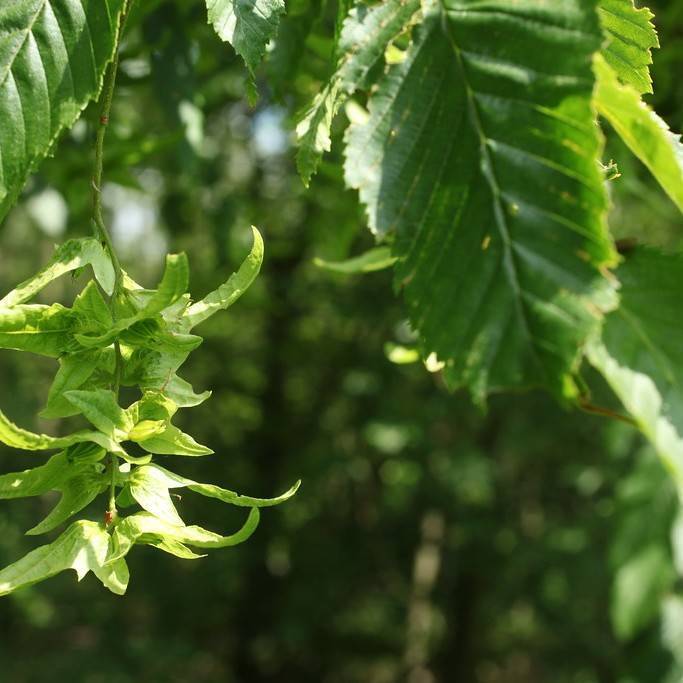
common hornbeam
Carpinus betulus 'Columnaris Nana'
Overview
The Common Hornbeam (Carpinus betulus 'Columnaris Nana') is an amazing plant species due to its hardy nature and narrow columnar shape. It features fascinating winter characteristics and can best be enjoyed during the winter months when its amber forked branches and grey bark add texture and color to the landscape. This tree likes full sun to partial shade in moist, well-drained soil and is suitable for average to dry climates. Mature sizes are 15-20 feet tall and 10-15 feet wide, making it ideal for small yards and foundation plantings. Its ability to tolerate harsh conditions makes it a great choice for urban environments. With its columnar shape and interesting winter features, the Common Hornbeam is a stunning and versatile tree.
Care Guide
Watering
Common hornbeams prefer regular watering, but should not be over-watered. Saturate the soil when watering, and allow the top layer of soil to dry out between waterings. In general, hornbeams should be watered 2 to 3 times a week during the growing season and less often in the winter. Before watering, check the soil for moisture and water when the top 2 inches of soil is dry. If temperatures are hot or windy, the plants may need to be watered more often.
Light
Common hornbeam (Carpinus betulus 'Columnaris Nana') is a moderately large deciduous, conical shaped tree that can grow in sun, semi-shade or shade prone areas. It prefers full sun for best results, although it can withstand some light shade. It needs at least 6 hours of sunlight per day in order to thrive and reach its full potential. Morning sun is preferable, as this will help the tree to dry off early in the day and reduce the chances of fungal diseases. Hornbeam can also benefit from some additional, indirect sunlight in the afternoon. Hornbeams are moderately tolerant in terms of soil preference, but they require well-drained medium to wet soils for optimal growth.
Temperature
Hardiness zone 4-8.
Pruning
Common hornbeam, or Carpinus betulus 'Columnaris Nana', requires pruning when the tree is young to shape it and encourage branching, with the most critical period occurring in the tree's first 3-5 years. For more mature trees, pruning should take place every 3-5 years to reduce the size, stimulate new growth, and remove dead and weak branches. Pruning should occur in late winter or early spring (February-March) before the tree breaks its dormancy. Established trees should be pruned by no more than 1-third of their total size, and care should be taken to ensure that all cuts are clean and level to the tree's branch structure.
Propagation
Layering Propagation, Grafting Propagation, Cutting, Seed Propagation
Related plants
Other plants you might like if you grow common hornbeam.