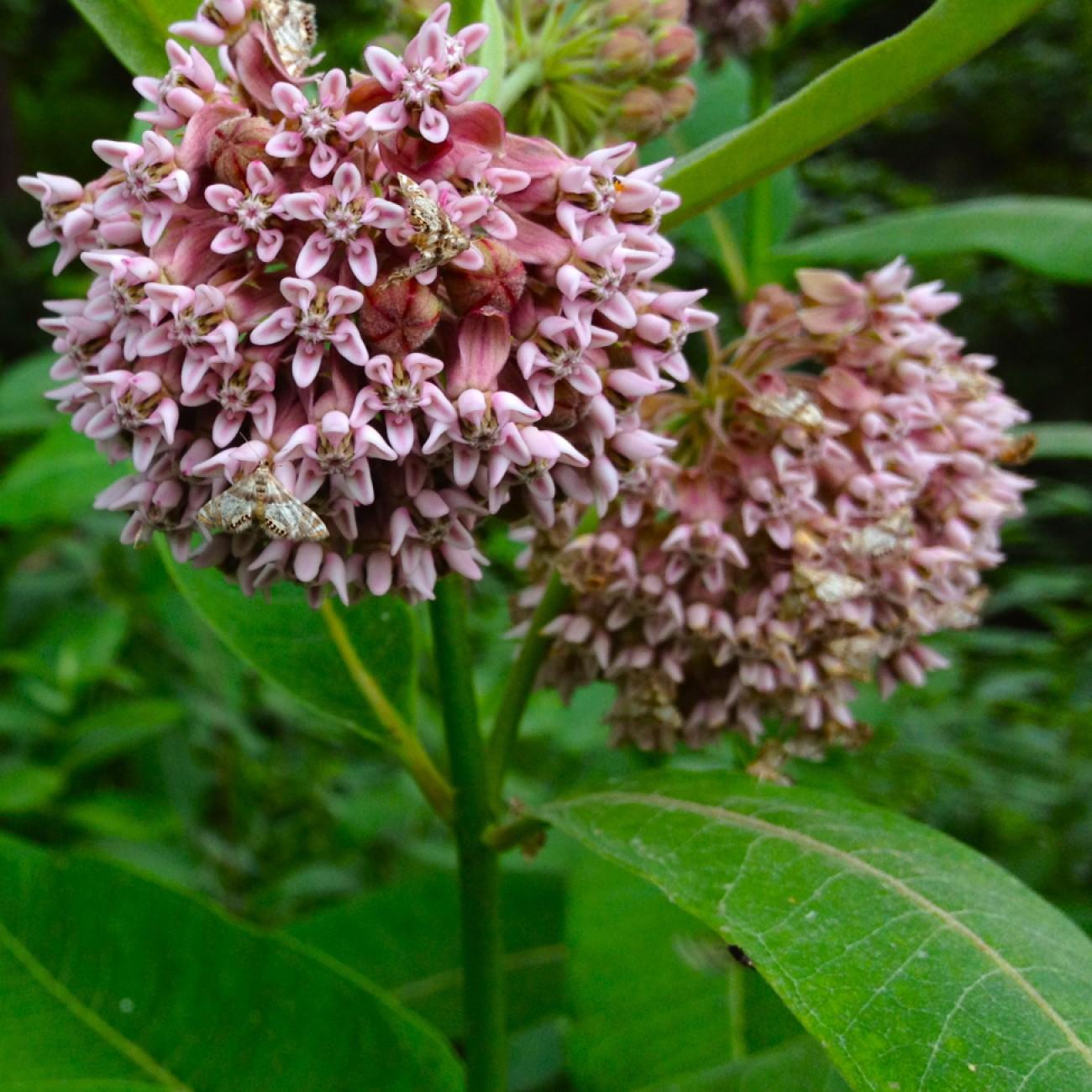
common milkweed
Asclepias syriaca
Overview
Common milkweed (Asclepias syriaca) is an amazing plant species. It is native to North America and can be seen growing wildly in prairies, fields, and roadsides. Its bright, fragrant, and star-shaped flowers are a staple of the summer season and attract pollinators such as bees, butterflies, and hummingbirds. It is an essential plant for monarch butterflies whose larvae depend on the plant’s toxic properties to survive. The leaves of the plant are large and are often used as food by monarchs. Common milkweed also has deep roots which make it drought-resistant and help to stabilize the soil. This is why it is often used in revegetation projects to help regrow native species. Truly, common milkweed is an amazing and fascinating plant species.
Care Guide
Watering
Common milkweed should be watered deeply but infrequently. Aim to water the plant once every 7 to 10 days. When watering, apply enough water that the soil is saturated and can’t absorb more. Monitor the soil each day and water when the top 3 or 4 inches feels dry to the touch. Watering in the morning is best so that the plant has time to dry out before nighttime. Young plants may need more frequent watering. If your area is experiencing drought conditions, water more often.
Light
Common milkweed plants need full sun to thrive, so they should receive at least 6 to 8 hours of direct sunlight on a daily basis. In order to achieve this, they should be planted in an area where they will get full sun all day long. If this is not possible, they should be planted in an area that receives full sun for most of the day with some shade in the afternoon, when the sun is at its hottest. When growing in the garden, milkweed plants should be given an open area to spread out and receive adequate sunlight.
Soil
Sandy Loamy Clay Rocky
Temperature
Hardiness zone 3-9.
Pruning
Common milkweed (Asclepias syriaca) should be pruned in the spring and summer months when the plant is actively growing. Pruning should remove dead or dying stems, as well as any old flower heads that have gone to seed. Pruning should be minimal and limited to 1/3 of the plant’s height. This will help prevent the plant from growing too large, as well as help maintain a healthy shape. Taking care not to inadvertently cut off new shoots or flower buds is important for a successful pruning session.
Propagation
Seed Propagation, Root Cutting, Division, Layering Propagation, Stem Propagation
Uses & Symbolism
Attracts: Butterflies.
Related plants
Other plants you might like if you grow common milkweed.