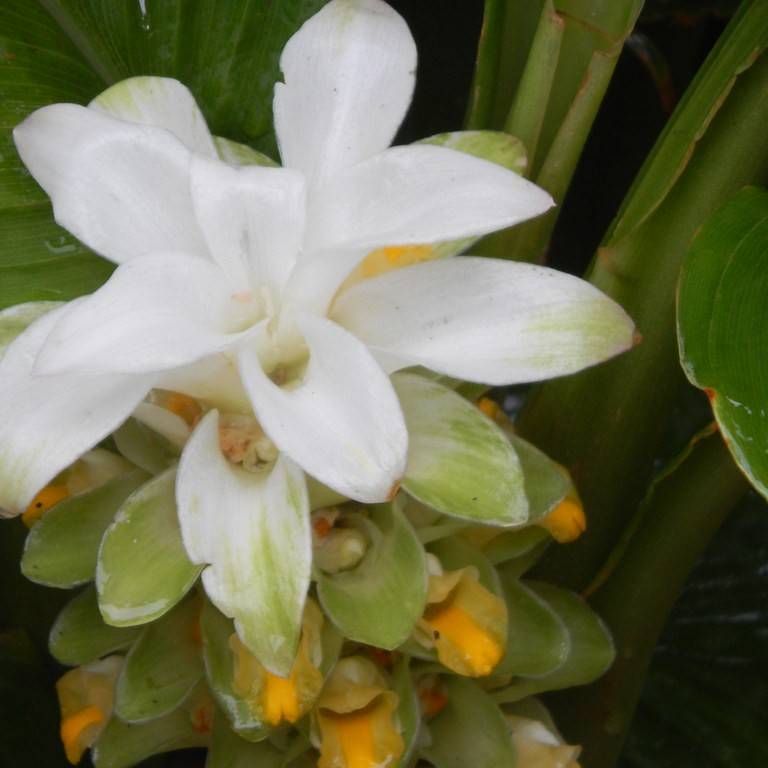
common turmeric
Curcuma longa
Overview
Common turmeric (Curcuma longa) is an amazing plant species for many reasons. It is valued for its medicinal properties and has been used for centuries in traditional Asian medicine. It is also valued for its culinary uses, as its yellow-orange powder can be used to flavor and color foods. It is also a powerful antioxidant, believed to reduce the risk of cancer and other diseases, making it a great choice for better health. Lastly, it is a beautiful ornamental plant with clusters of bright yellow flowers, adding a touch of color and beauty to any garden.
Care Guide
Watering
Common turmeric (Curcuma longa) plants should be watered once or twice a week, in the morning, until the soil is moist but not soggy. Allow the soil to dry out between waterings. To check the soil, simply stick a finger in the dirt. If the top few inches of soil feel dry, it is time to water. During the winter months, these plants should be watered less frequently. To ensure that your turmeric plants stay healthy, water them enough to keep the soil moist but not saturated.
Light
Common turmeric requires a minimum of 6 hours of direct sunlight each day. Ideally, full sunlight should be provided between the hours of 8 am and 4 pm for optimal growth. As with most plants, too much sunlight can be detrimental, so it is important to ensure that the plant has access to enough sunlight while providing it with adequate shade during hot, sunny hours. When provided with the right amount of sunlight, common turmeric will flower in the summer and produce its signature edible, bright orange rhizomes.
Temperature
Hardiness zone 8-11.
Pruning
The best time to prune common turmeric (Curcuma longa) is during the early spring before the plant begins to actively grow. However, if necessary, light pruning can also be done in late summer. It is important to prune common turmeric carefully and sparingly as the plant does not tolerate heavy pruning. Remove any dead, dying, or diseased stems, as well as any overcrowded or weak stems. Also, any stems that are competing with the CentraLe stem should be removed. The overall goal should be to create and maintain an open and airy shape. Generally, a light pruning of 1/3 of the aerial part of the plant can be done every few years. This encourages branching, a bushier habit, and more abundant flowering and fruiting. When pruning, use clean, sharp tools and make sure to make clean, angled cuts.
Propagation
Division, Stem Propagation, Root Cutting, Seed Propagation, Air Layering Propagation
Related plants
Other plants you might like if you grow common turmeric.