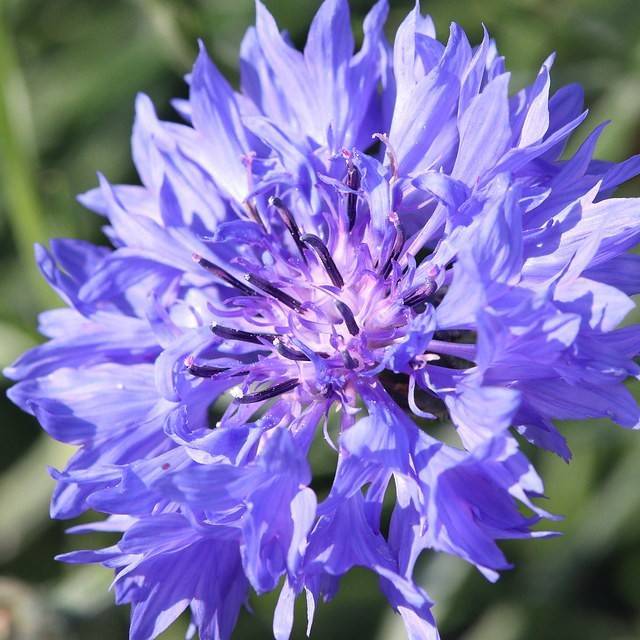
cornflower
Centaurea cyanus
Overview
The cornflower (Centaurea cyanus) is an incredible species that provides beauty, medicine, and food! Its vibrant petals in shades of cornflower-blue, lavender, and white capture the eye and spread cheer. Cornflowers have long been prized for their medicinal properties too, and have been used to treat everything from nervous exhaustion to fever. Plus, its edible seeds are used to make flavoring for syrups, liquors, and foods. With bright beauty, an array of medicinal and culinary uses, and drought-tolerance, this amazing plant has something for everyone.
Care Guide
Watering
Cornflower requires consistent watering to thrive. During the active growing season (spring to summer), water the plant when the topsoil feels dry to the touch - about every 1-3 days. During the winter months, reduce watering as much as possible, as the plant goes dormant. Water lightly once a month during cold winter months or if the plant shows signs of drooping leaves.
Light
Cornflower (Centaurea cyanus) prefers full sun for at least 6 hours per day in order to reach its highest potential in terms of flower production. They flower best in cooler climates of the northern hemisphere due to their native range being in the plains of central Europe and regions around the Mediterranean. In more southern regions, they will flower more sporadically and will require more frequent water in order to keep their blossoms looking lush and vibrant. In more temperate regions, they should still receive a minimum of 4-5 hours of direct light for optimal growth and development.
Temperature
Hardiness zone 2-11.
Pruning
Cornflower (Centaurea cyanus) plants should be pruned in late winter or early spring, when the plant is dormant. Pruning should remove any broken, diseased, or dead stems, as well as any flower heads that have become detached and are lying on the ground. If the plant is growing aggressively, it may need to be pruned back quite far to encourage it to become bushier. However, be careful not to prune too much or you may damage the plant.
Propagation
Seed Propagation, Division, Cutting, Layering Propagation
Uses & Symbolism
Attracts: Birds, Butterflies.
Related plants
Other plants you might like if you grow cornflower.