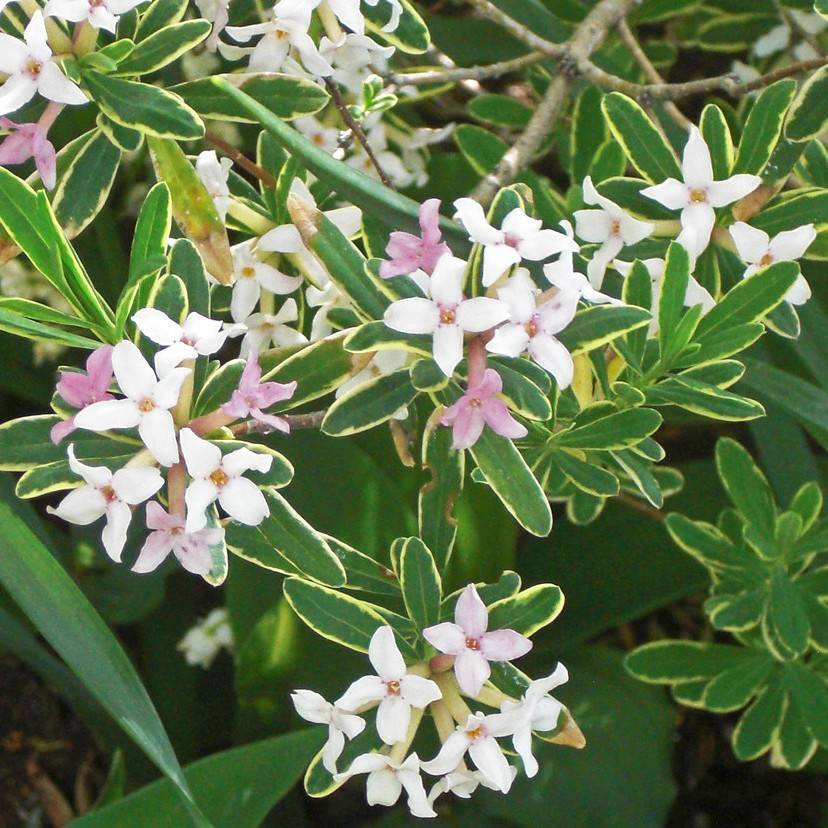
daphne
Daphne burkwoodii 'Carol Mackie'
Overview
The Daphne burkwoodii 'Carol Mackie' is truly an amazing plant. It is hugely popular among gardeners, offering a burst of colour and fragrance throughout the summer months. The shrub produces brilliant pink and white flower clusters, each with a strong, sweet smell that can fill a garden or outdoor space. Its eye-catching foliage of soft, evergreen leaves and delicate stems makes it an attractive addition to any garden. Additionally, it is low maintenance and drought tolerant, so it thrives in many different climates. With its ability to provide a burst of beauty and aroma, the Daphne burkwoodii 'Carol Mackie' is truly an incredible plant.
Care Guide
Watering
When watering Daphne, you should water deeply and infrequently, allowing the soil to dry out completely between waterings. The frequency in which to water will depend on a variety of factors, such as the amount of heat and sunlight the plant is exposed to, and the time of year. During hot and dry times you should water up to every 5 days. In cooler temperatures and in winter months you will likely need to water your Daphne only once a week or every other week. When watering, try to avoid getting the leaves of the Daphne wet as this can encourage fungal and bacterial diseases, so it is best to water the soil directly.
Light
Daphne (Daphne Burkwoodii 'Carol Mackie') plants prefer full sun to partial shade with some protection from the afternoon sun in south-facing regions. In northern regions, light shade is beneficial during the hottest part of the day. The optimum amount of sunlight for a Daphne plant is 4 to 6 hours per day, split up between morning and afternoon. In cooler conditions, the plant can tolerate up to 8 hours of direct sunlight.
Temperature
Hardiness zone 4-8.
Pruning
When pruning Daphne burkwoodii 'Carol Mackie', it is important to prune with care, as these shrubs can be quite tender. Pruning should take place in late spring, after the threat of frost has passed, and before new growth begins in early summer. Generally, prune very lightly, trimming away no more than a third of the existing growth. This will encourage more bushy foliage and increase flowering potential. Removing old, woody stems and any damaged or diseased foliage is also beneficial. Deadheading spent flowers will ensure prolonged flowering. When pruning to shape this shrub, aim to create an open centre to allow plenty of light and air flow. As a rule of thumb, avoid topping the bush, as this can stunt its growth and be visually unappealing.
Propagation
Layering Propagation, Cutting, Division, Grafting Propagation
Related plants
Other plants you might like if you grow daphne.







