disanthus
Disanthus cercidifolius
Overview
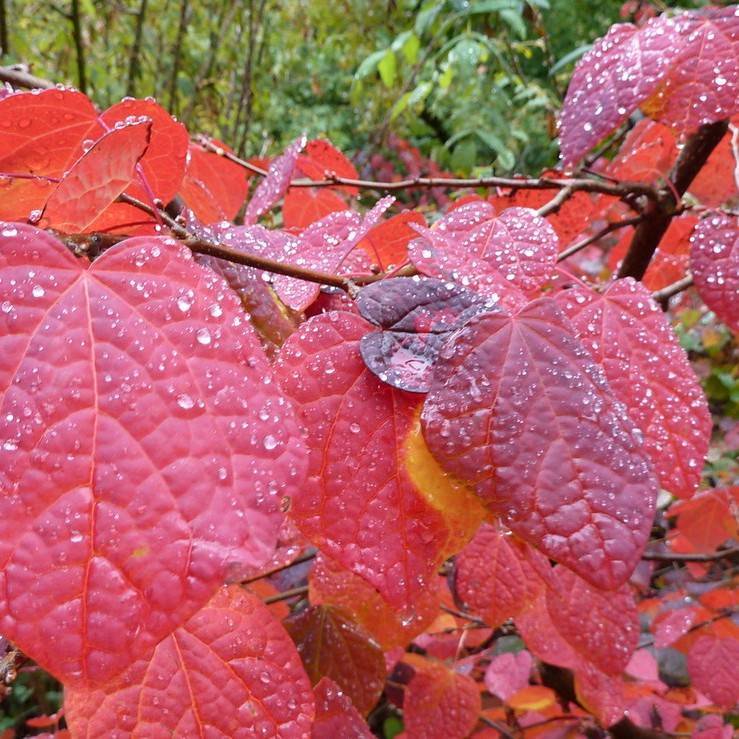
Disanthus cercidifolius, also known as the Japanese pheasant's eye, is an amazing plant species for many different reasons! It blooms with clusters of bell-shaped pendulous creamy white flowers in autumn, which provides a wonderful splash of colour to the landscape. Its delicate foliage displays hues of brilliant yellow, orange, and red in the fall, turning an attractive maroon-bronze colour in winter. It is also a very hardy species that does well in a variety of soils and climates. In addition, its low-maintenance nature makes this an ideal option for novice gardeners. All in all, Disanthus cercidifolius is an eye-catching and easy-to-maintain plant that will bring vivid colour and beauty to any garden.
Care Guide
Watering
Disanthus cercidifolius should be watered thoroughly once per week in the Spring and Summer months. During the Fall and Winter, water only when the top inch of soil is dry. Plant in moist, well-drained soil and avoid over-watering to prevent root rot from occurring. If planted in soil that is not allowing excess moisture to drain away, move the plant to a better location. It’s better to err on the side of caution and water too little than to over-water.
Light
The amount and timing of sunlight necessary for Disanthus cercidifolius, a plant species native to East Asia, depends on the climate in which it is grown and its growth desired. In general, they prefer full sun, with some partial shade during the hottest part of the day. In areas that experience cold winters, full sun during the summer is beneficial, since it speeds up flowering and promotes the development of foliage. In regions with warmer climates, this species is able to tolerate some shade for a portion of the day, but too much shade can cause the foliage to become sparse and yellow. This plant tends to bloom mid-spring and need at least 6 to 8 hours of sun exposure each day. Any more than this could be damaging. With adequate sunlight, Disanthus cercidifolius should reach its fullest potential in terms of growth and flowering.
Soil
Acidic, Humus rich, Well-drained
Temperature
Hardiness zone 5-8.
Pruning
Disanthus cercidifolius is a deciduous shrub that does best with annual pruning. It should be pruned in late winter or early spring, typically once the plant is no longer in dormancy. Pruning should be moderate and gradual, removing up to 25% of the foliage each year and keeping the general shape of the bush. Remove weak and old growth, leaving the strong and healthy shoots untouched. Pruning should primarily focus on removing any upright branches to help encourage the spread of the bush and help the plant to maintain a more bushy form. Pruning will also help to thin out the foliage, allowing for more light and air circulation to the center of the bush.
Propagation
Seed Propagation, Layering Propagation
Diseases & Pests
Common pests: Pest resistant, Disease resistant.
Related plants
Other plants you might like if you grow disanthus.