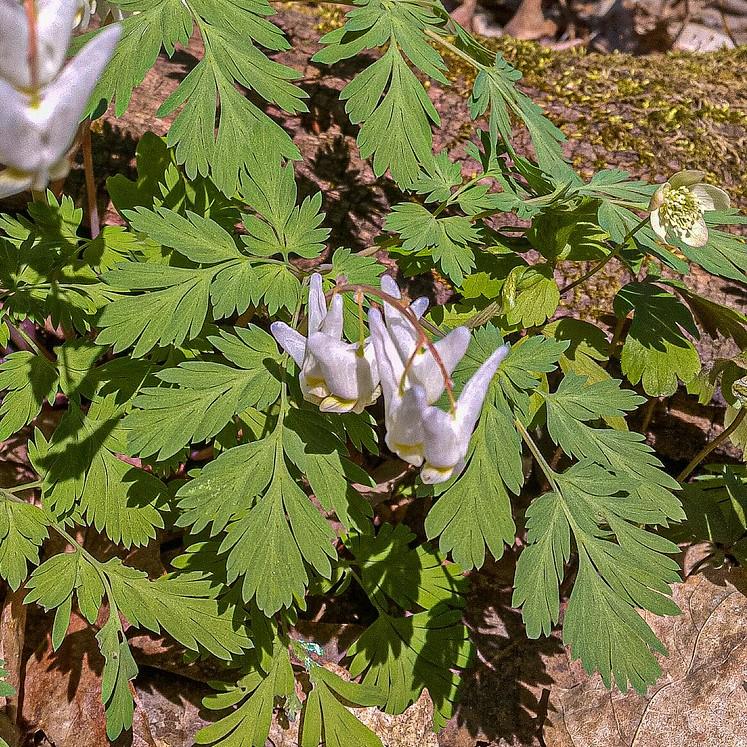
Dutchman's breeches
Dicentra cucullaria
Overview
Dutchman's breeches is an amazing plant species that will bloom early in the spring in North America. These unique white and yellow flowers appear to be upside-down, like a man wearing breeches. It's often spotted in wooded areas, open fields, and along riverbanks, and often grows in colonies. It's a desirable and attractive plant, and is even listed as the state wildflower of Iowa! Dutchman's breeches is an elegant and versatile perennial that is easy to care for, making it a great choice for gardeners of all levels. With its bright yellow-white blooms and unique shape, it's no wonder Dutchman's breeches is so beloved!
Care Guide
Watering
Dutchman's Breeches should be watered regularly during the spring and summer and more sparingly in the fall and winter. During the growing season, water the plant deeply and thoroughly yet be mindful not to overwater. Allow the soil to dry out slightly in between waterings. During the winter season, water only when the top inch of soil becomes dry. Check the moisture levels of the soil before watering as this species is particularly susceptible to root rot. Water the soil around the roots instead of directly on the foliage, and avoid getting the foliage wet.
Light
Dutchman's Breeches (Dicentra cucullaria) are best grown in areas that receive partial to full shade and bright, indirect sunlight. They require approximately 4 to 6 hours of direct sunlight per day, typically in the morning or late afternoon, to flower optimally. Avoid exposing Dutchman's Breeches to the intense midday sun, as this can leave them sunburned and scorched. The plants may tolerate shade and still flower, but growth and flowering will be less profuse. As the summer approaches, some shade during the hottest part of the day may be beneficial.
Temperature
Hardiness zone 3-7.
Pruning
Dutchman's breeches should be pruned back after flowering. This plant species typically blooms in early spring, so pruning should be done in late spring, around May or June. Using pruning shears, cut back the flowering stems but leave any newly developing foliage. Don't cut back the foliage too much, however, since this can reduce the amount of blooms the following year. If the plant has lost its shape or become overly dense, the dead stems and canes can be cut away to help the plant regain proper air circulation.
Propagation
Seed Propagation, Division, Layering Propagation, Cutting
Related plants
Other plants you might like if you grow Dutchman's breeches.