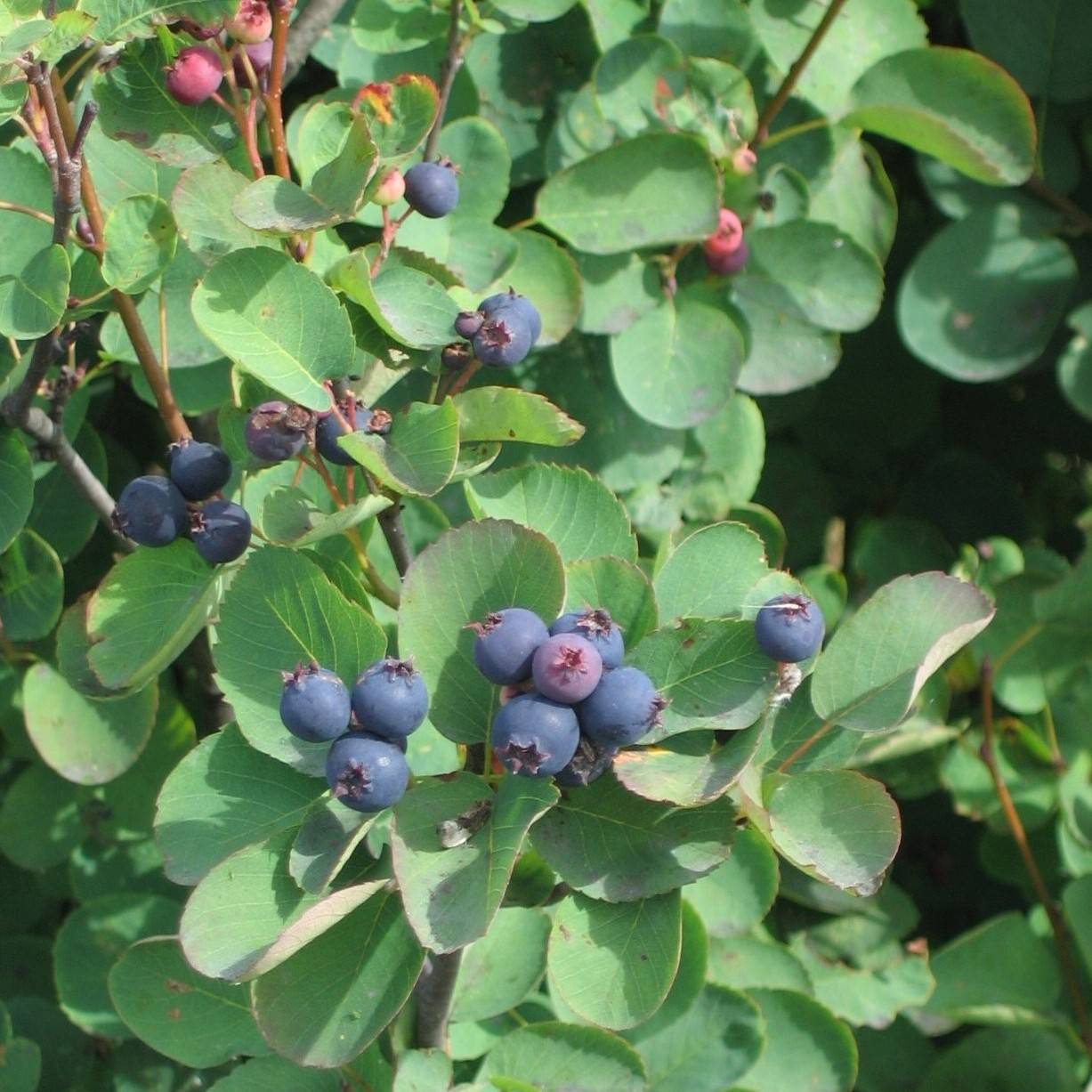
dwarf serviceberry
Amelanchier alnifolia var. pumila
Overview
The dwarf serviceberry (Amelanchier alnifolia var. pumila) is an amazing shrub due to its short stature and ease of maintenance. These deciduous shrubs form mounding clumps that only reach 3 feet in height making them a great choice for smaller gardens and landscapes. In spring, white flowers cover the plant in a haze of beauty while in fall, vibrant orange and red foliage add a splash of seasonal color. In summer, small berries are harvested by wildlife and birds, but can also be eaten by humans. This shrub is a great choice for those looking for low-maintenance and incredible beauty in a small package.
Care Guide
Watering
The dwarf serviceberry (Amelanchier alnifolia var. pumila) is a small, shrubby plant that thrives in moist, well-drained soils. It requires regular watering to keep its roots moist, but should not be over-watered. Water the dwarf serviceberry weekly, about 1-2 inches of water per week. Water more often during periods of extreme heat or drought, and less frequently in cool or wet conditions. During the summer, it may be necessary to provide extra water during particularly hot and dry periods. Provide adequate drainage to prevent root rot, and avoid getting the leaves wet when possible.
Light
Dwarf serviceberry (Amelanchier alnifolia var. pumila) thrives best when planted in full sun, receiving at least 6-8 hours of direct sunlight each day. During the summer months, this plant will benefit from the extra hours of sunshine available. It's important to note that the plant should be protected from strong afternoon sun to prevent scorching of the leaves in the hot season. In the cooler months, the plant will do just fine with a minimum of 4 hours of direct sunlight each day.
Soil
Clay, Sand, Loam
Temperature
Hardiness zone 2-7.
Pruning
Dwarf serviceberry (Amelanchier alnifolia var. pumila) should be pruned in late winter/early spring, usually between late February to mid-March. Pruning should only be done to keep the shape of the shrub desirable, and should never remove more than 1/3 of the plant's total growth. Removing too many branches or leaves can have a negative effect on the overall health of the plant. The best practice is to identify and remove any dead, damaged, or diseased branches.
Propagation
Cutting, Grafting Propagation, Layering Propagation, Seed Propagation, Division
Uses & Symbolism
Attracts: Birds.
Related plants
Other plants you might like if you grow dwarf serviceberry.