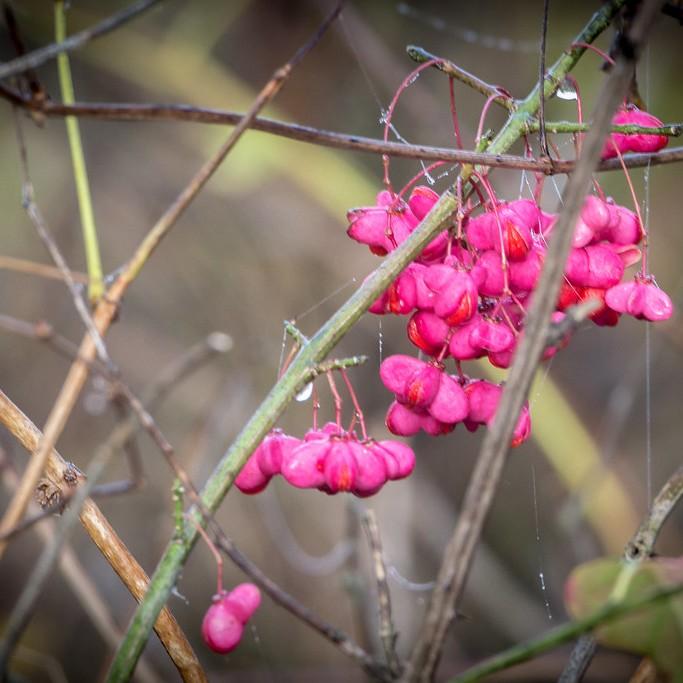
eastern wahoo
Euonymus atropurpureus
Overview
Eastern Wahoo is an amazing plant species suited to a variety of climates and soils. It has beautiful rust-colored foliage in the fall, and its emerald green oval-shaped leaves provide interest in any garden. It is a moderate grower, and can reach up to twenty feet tall, which makes it perfect for screens, hedges and specimen plantings. Its deep tap-roots give it superior resistance to drought and extreme weather. Its multiple trunks make it a landscaper's favorite, providing an interesting texture and shape. Plus, its clusters of small, fleshy fruits also give it ornamental interest. Eastern Wahoo is a reliable addition to any garden, making it an ideal choice for attracting birds and other wildlife.
Care Guide
Watering
The Eastern Wahoo requires regular watering to stay healthy. It’s best to water the plant in the morning or evening when temperatures are cooler. During the summer months, water the plant thoroughly every 7 to 10 days. In the winter, water it less frequently (about every 3 weeks). Make sure the soil is moist (not soggy) and ensure that the entire root system is getting watered. Avoid wetting the foliage to minimize the spread of disease.
Light
Eastern wahoo will thrive in full sunlight during the spring and summer months when the temperature is warm. During the cooler months of fall and winter, eastern wahoo should be exposed to morning sunlight for about 4 hours. This should be sufficient to provide the plant with the light it needs to carry out photosynthesis, but during these months, direct sun exposure should be avoided in order to prevent too much stress and shock to the plant.
Temperature
Hardiness zone 3-7.
Pruning
Eastern wahoo should be pruned in late winter to early spring. Pruning helps to reduce the size of the plant and encourages thicker, healthier growth. It is best to remove unhealthy or dying branches first up to the point of healthy growth. Weak branches should be removed as well, ensuring that the majority of the growth is healthy and able to withstand elements such as wind and snow. Major pruning should only be done when necessary, and should never reduce the plant’s overall size to less than 1/3 of its original size as this would damage the plant. Minor pruning should be done throughout the season to remove dead or damaged branches, and small amounts of thinning can also be done to enhance shape and form.
Propagation
Cutting, Layering Propagation, Grafting Propagation, Seed Propagation, Division
Uses & Symbolism
Attracts: Birds.
Related plants
Other plants you might like if you grow eastern wahoo.