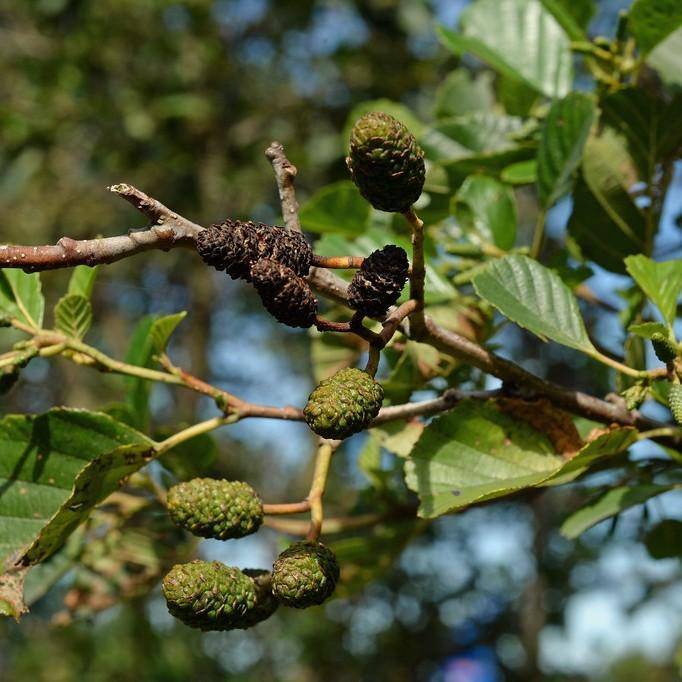
European alder
Alnus glutinosa
Overview
European alder (Alnus glutinosa) is a stunning species of tree renowned for its vibrant, lush foliage. It's a fast-growing native to Europe and can reach heights of up to 40 feet, making it a great choice for creating privacy and shade. Its bark varies from ruddy-grey to light grey and is also commonly used in furniture and construction projects. This hardy tree prefers damp soil and can tolerate most conditions, from cold regions to urban environments. It is also useful in controlling waterlogging and erosion around rivers and lakes. European alder is a great choice for anyone looking for a beautiful, low-maintenance addition to their garden.
Care Guide
Watering
European alder should be watered regularly throughout the growing season. Water deeply and evenly once a week, timing your watering so that the soil dries out some between waterings. This plant prefers on the drier side, so it is better to underwater than over watering. Generally, European alder needs between 2 and 3 inches of water per week during the growing season. In hotter, drier climates, this amount may need to be increased.
Light
European alder prefers full sun but can tolerate some partial shade. Ideally, it should get at least 6 hours of direct sunlight each day, divided into morning and afternoon sunshine sessions. In climates with hot and dry seasons, the afternoon sunlight should be reduced or avoided completely to protect the tree from extreme temperatures.
Soil
Clay, Sand, Loam
Temperature
Hardiness zone 3-7.
Pruning
For European alder, pruning should occur in late winter to early spring. For this species of tree, light pruning is generally recommended as they tend to respond well to shaping in order to help them maintain their natural form. Before pruning, inspect the tree for broken branches, dead wood, or branches that have grown too close together. When pruning, focus on selectively removing 1 or 2 branches from each side of the tree to maintain shape. It is important to ensure that no more than 1-third of the crown is removed. The branches should be cut as close to the trunk as possible without damaging the trunk, and the cuts should be made at a slight angle.
Propagation
Layering Propagation, Cutting, Grafting Propagation, Seed Propagation
Uses & Symbolism
Attracts: Birds.
Related plants
Other plants you might like if you grow European alder.