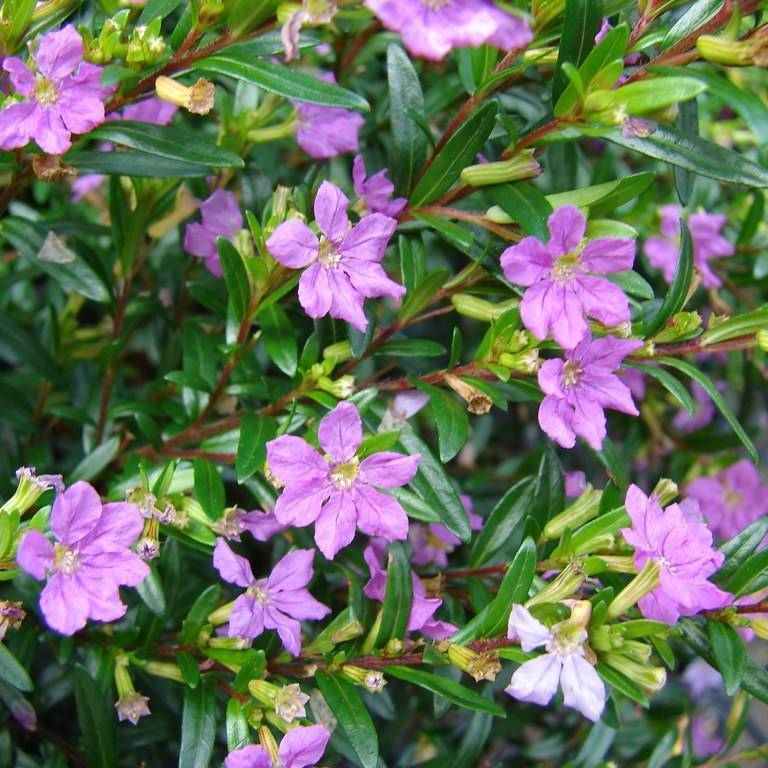
false heather
Cuphea hyssopifolia
Overview
False Heather, or Cuphea Hyssopifolia, is an amazing plant. Not only is it fast-growing, but it is also incredibly low-maintenance. It requires minimal pruning and can survive in both dry and wet climates. It also grows easily indoors as a houseplant or outdoors as a garden specimen. False heather is also highly resilient, withstanding heat, drought, and even occasional frost without issue. Its delicate foliage is a bright, evergreen green and blooms prolifically with small bell-shaped flowers. Few plants are as easy to care for or as charming as False Heather – making it the perfect choice for busy gardeners.
Care Guide
Watering
False heather requires moderate levels of moisture, so it should be watered regularly to ensure that the soil stays moist. The best way to water this plant is by using a watering can to evenly distribute the water over the soil. Water deeply and thoroughly, allowing the water to reach a significant depth. Avoid overhead watering and soak the soil until it is damp, but not saturated. Depending on the temperature and the humidity levels, false heather should be watered once every 2 to 3 days. In very hot weather with a lot of sun, it might require an extra watering session. In winter, watering should be reduced and only done if the soil is very dry.
Light
False heather (Cuphea hyssopifolia) prefers a minimum of 6 hours of indirect sunlight a day. Although it can survive in full sun, too much of it can cause the false heather to become stressed and can leave it with sunburn. Instead, try to keep it in an area where it will receive partial shade in the afternoon. Additionally, if the area cannot provide enough indirect sunlight, using a grow light to supplement the existing sunlight can help ensure that your plant thrives.
Temperature
Hardiness zone 9-11.
Pruning
False heather should be pruned annually for shaping and size control. Prune in early spring, cutting back the shrub by no more than 1-third of its total height and width. Remove the oldest and longest branches, as these have the least amount of new growth and flowering potential. Prune off any dead, broken, or diseased branches. Remove wayward shoots that are out of shape or are growing in the wrong direction. Lightly trim the shrubs to remove excess foliage and blooms after it has finished flowering.
Propagation
Seed Propagation, Cutting, Division, Layering Propagation
Uses & Symbolism
Attracts: Hummingbirds, Butterflies.
Related plants
Other plants you might like if you grow false heather.







