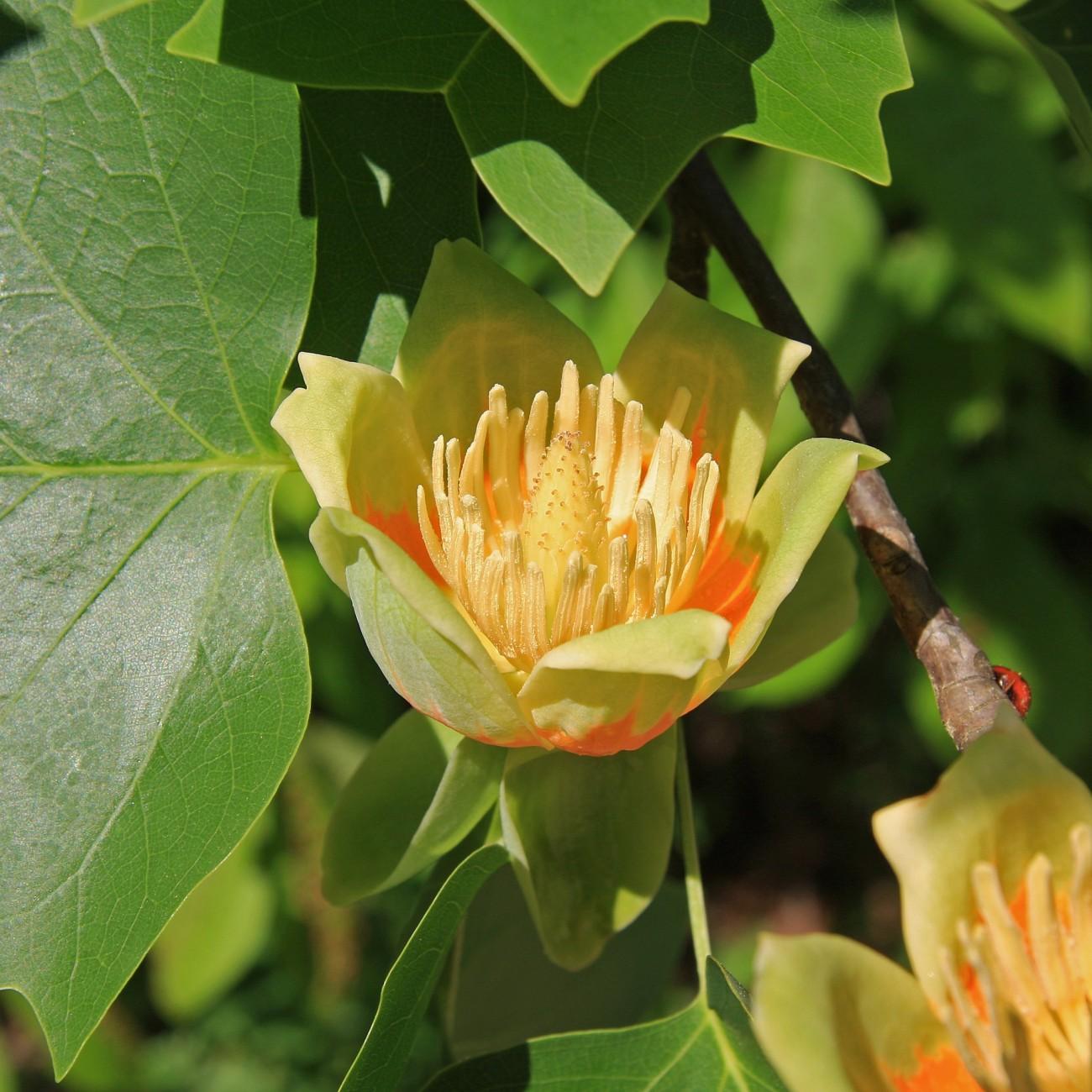
Fastigiatum Tuliptree
Liriodendron tulipifera 'Fastigiatum'
Overview
The Fastigiatum Tuliptree is an amazing plant species due to its distinctive, sharply columnar shape and its striking flowers. Its leaves are triangular in shape and yellowish-green in color. In the summer, the Fastigiatum Tuliptree produces beautiful, cup-shaped flowers, usually orange with yellow accents. In the fall, its foliage is an especially brilliant yellow color. It's a cold hardy, fast growing tree that can reach 40-60 feet in height, making it an ideal choice for a tall privacy screen or specimen tree. Its tall, columnar shape also makes it an ideal choice for tight spots where a tall, slim tree would fit in nicely. Its year-round interest, fast growth rate, and unique shape make this plant species an amazing addition to any garden.
Care Guide
Watering
The Fastigiatum Tuliptree is a medium-sized, deciduous tree that prefers a moist, well-drained soil. It is recommended to water the Fastigiatum Tuliptree deeply and frequently during the active growing season. During the summer months, aim to water the tree 2 to 3 times a week to ensure the soil is moist but not soggy. During the winter months, water only if the soil is very dry. Be sure to never water the tree more than once a week during the winter months.
Light
Fastigiatum Tuliptree is best grown in full sun, meaning it should receive 6 to 8 hours of direct sunlight each day. It is best to give them the most sunlight possible in the morning/early afternoon and less in late afternoon or evening, as too much sun can cause leaf scorch or stress. Additionally, in areas with hot summers, it is best to give them some afternoon shading to keep them from overheating.
Soil
Loamy Humus
Temperature
Hardiness zone 5-5.
Pruning
Fastigiatum Tuliptree should be lightly pruned twice a year, once in the spring when buds are just beginning to appear and another time in late summer before the tree goes into dormancy. Pruning during the spring will help maintain the upright shape of the tree whereas pruning during the late summer will reduce excessive growth that may occur during that time. Make sure to only prune dead or damaged wood, and to prune only 1-third of the branches. Select branches evenly throughout the canopy that appear too crowded in order to maintain the natural shape of the tree.
Propagation
Seed Propagation, Grafting Propagation
Uses & Symbolism
Attracts: Birds, Hummingbirds.
Diseases & Pests
Common pests: Anthracnose, Fungal leaf spot, Root rot.
Related plants
Other plants you might like if you grow Fastigiatum Tuliptree.