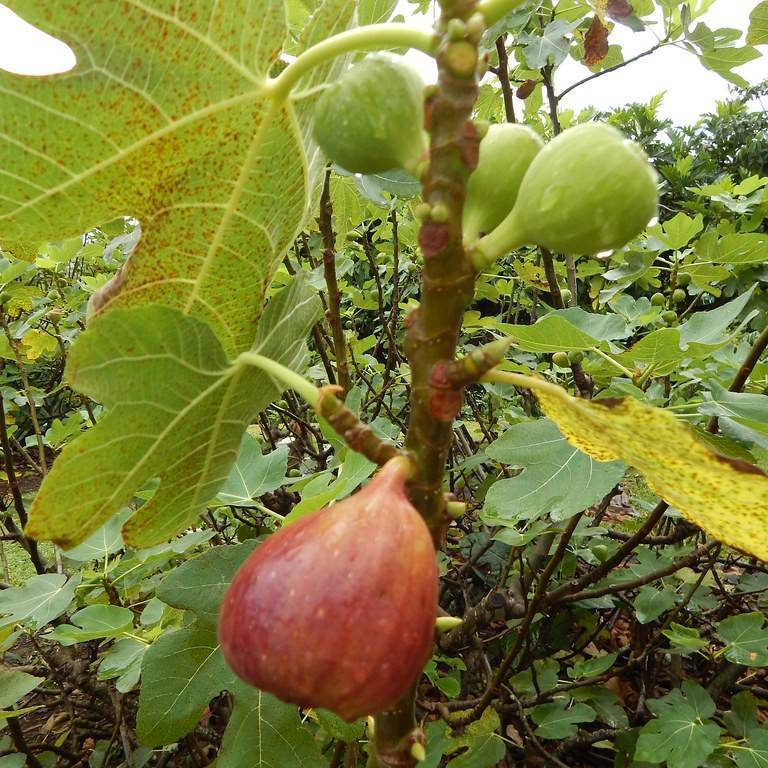
fig
Ficus carica 'Brown Turkey'
Overview
Fig (Ficus carica 'Brown Turkey') is an amazing plant species with its beautiful sweet flavored fruits. It has magnificent deep green, lobed and shiny leaves on its branches that can grow up to 15 m high. It is an evergreen plant that like full to partial sun and prefers well drained soil with consistent moisture. This plant is drought tolerant and it flourishes in hot summer climates. The fruits of 'Brown Turkey' are sweet and juicy and can provide delicious jams, jellies, preserves and more. This plant species is truly amazing for its flavor, tolerance to drought and sunlight, and overall aesthetics.
Care Guide
Watering
Figs require an adequate amount of water to ensure that the plant will produce and succeed. As a general rule, you should water your fig tree once a week. The amount of water you should use depends on the climate conditions, the time of year, and the stage of growth for the fig tree. In hot and dry climates, fig trees may need to be watered twice a week during the summer months. During late spring and early summer, when fruit is most likely to form, water more frequently, as the figs need an extra boost of moisture to properly form. In cooler climates, watering can be reduced to once a week. If the soil is moist 1-2 inches down, then the fig tree does not need watering.
Light
Fig plants need a good amount of sunlight - at least 6 hours of direct sunlight per day - in order to produce fruit. When grown in very hot climates, a fig plant should receive morning or morning and late afternoon sunlight, as midday sun can be too intense. During the winter months, figs may need more light to remain healthy and robust. Allowing the plants to get some direct sun during the winter months is beneficial for growth.
Soil
Well-drained
Temperature
Hardiness zone 7-7.
Pruning
Pruning is an important part of caring for your fig tree, as it focuses on the shaping and managing of its growth. Fig trees should be pruned twice a year, once in early spring and then again in late summer. In the springtime, trim any outer branches that may be crossing or rubbing against other branches, as well as any dying or dead wood. Late summer pruning is primarily focused on maintaining the size and shape of the tree by removing crossing branches and any new shoots that may have sprouted since springtime pruning. It is important to note that fig trees can also be pruned for increased fruit production. In this case, thin the canopy to allow for the maximum amount of sunlight to be able to reach the branches, and then decrease the number of fruits per branch.
Propagation
Air Layering Propagation, Cutting, Grafting Propagation, Division, Seed Propagation
Diseases & Pests
Common pests: Pest resistant, Disease resistant.
Related plants
Other plants you might like if you grow fig.