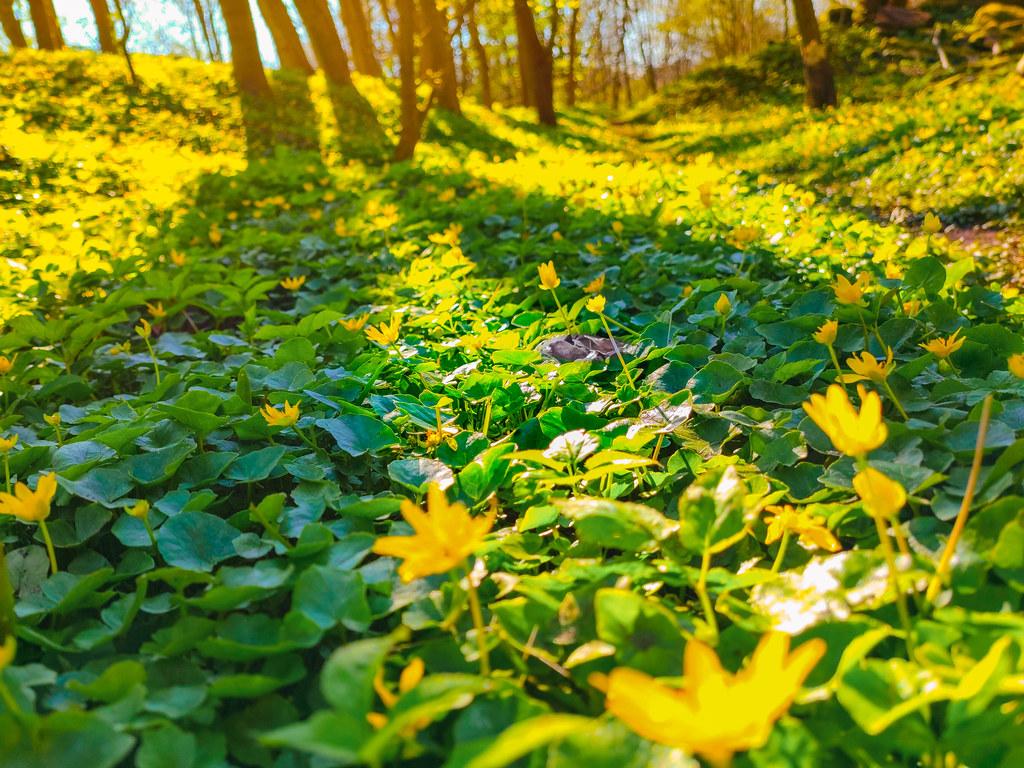
fig buttercup
Ficaria verna
Overview
The fig buttercup (Ficaria verna) is a fantastic addition to any garden or outdoor area. Its bright yellow flowers are sure to bring a hint of cheer, while its low, spreading habit means it won't take over other plants. It's known for its long bloom time, with the yellow blossoms appearing in late winter and lasting until spring. It's also an easy plant to care for; it loves shade, can handle dry soil, and requires little maintenance. All in all, it's an amazing, bright, beautiful, and low-maintenance plant that is sure to bring joy to its surroundings.
Care Guide
Watering
Fig buttercup (Ficaria verna) prefers moist soil, but will tolerate periods of drought. It is necessary to water regularly to keep the soil moist, but avoid overwatering. In the growing season (April-September), water the plants regularly, making sure that the soil does not dry out. In winter (October-March), water the plants less frequently, but still at a regular interval. Water deeply once or twice a week if there is no rain. Ensure that the soil has had time to dry out slightly between waterings.
Light
The fig buttercup (Ficaria verna) requires partial shade to full light exposure, but will also tolerate shade for multiple hours throughout the day. The ideal amount of sunlight for this plant species is around 6-8 hours of sun per day, with the sun at a moderate to strong intensity. The fig buttercup prefers as much natural sunlight as possible, but direct sun should be avoided when temperatures rise too high, or the plant may be susceptible to leaf burn. For the best growth, place this plant in the brightest area available with an environment that is not too hot or too humid.
Temperature
Hardiness zone 4-8.
Pruning
Fig buttercup (Ficaria verna) should be pruned anytime between late autumn and early spring. Pruning should be light and involve removing only a few of the old flower stems. This will allow the plant to focus its energy on new growth, while encouraging the development of new flowers. Since many of the flower buds are located close to the base of the plant, care should be taken to remove only the flower stems and avoid cutting any of the smaller leaves. When pruning, it is best to use a sharp pair of scissors or shears to ensure that cuts are clean and precise.
Propagation
Division, Seed Propagation, Cutting
Related plants
Other plants you might like if you grow fig buttercup.