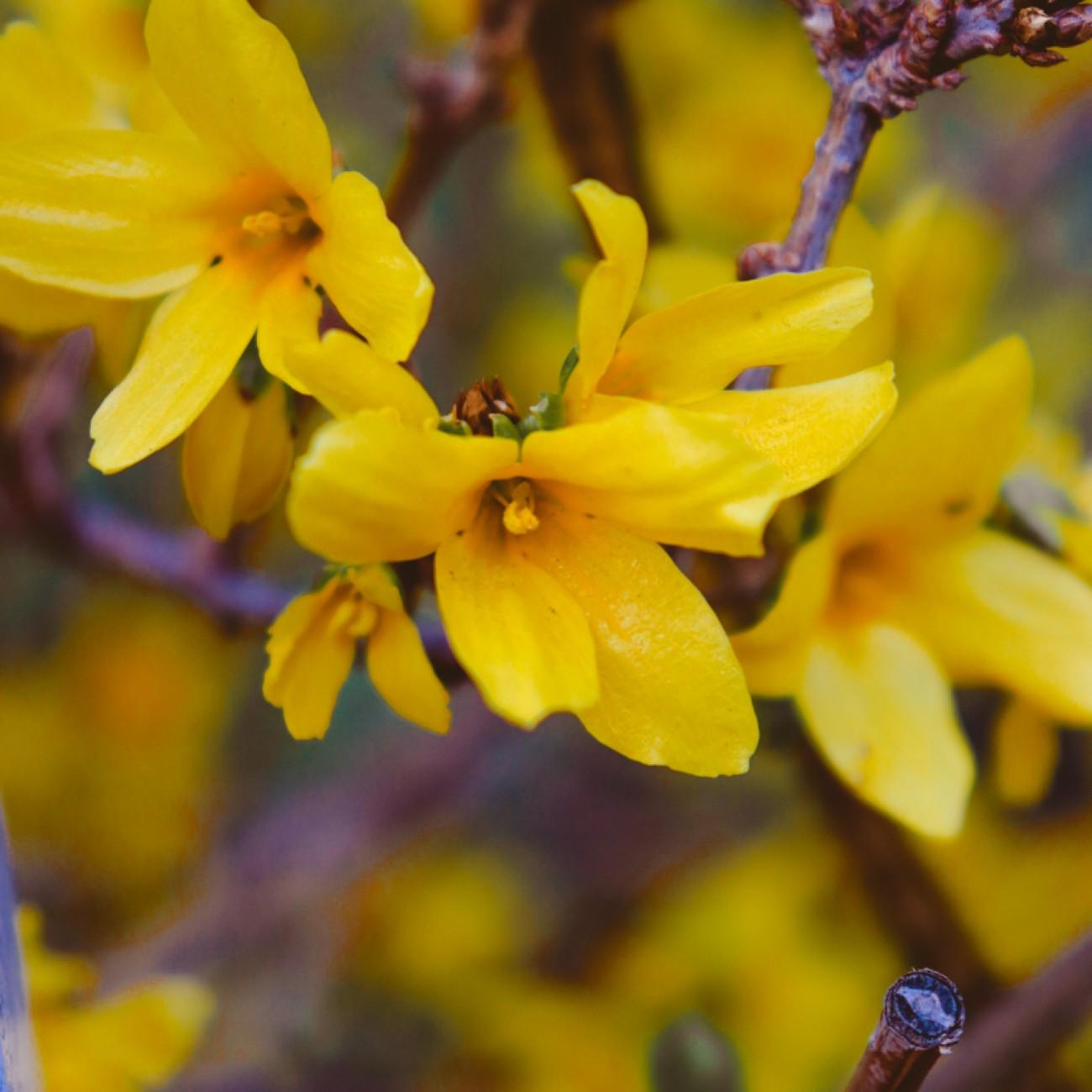
forsythia
Forsythia 'Arnold Dwarf'
Overview
Forsythia 'Arnold Dwarf' is a compact shrub, making it a great choice for small gardens. It produces an abundance of bright yellow flowers in the spring, providing a dazzling show of bold contrast in the garden. The leaves are also strikingly beautiful, displaying shades of yellow and green giving the overall appearance of the shrub an amazing look. Furthermore, it is quite low maintenance and easy to care for, making it an ideal choice for anyone looking for an attractive shrub that requires minimal upkeep.
Care Guide
Watering
Forsythia 'Arnold Dwarf' should be watered once per week during the growing season. During this period of time, give the shrub a deep soaking that ensures the top few inches of soil become moist and provide enough water so that some drains out of the bottom of the pot. During the fall and winter months, water only when the soil has become dry. Always check the soil before watering to determine if it is in need.
Light
Forsythia 'Arnold Dwarf' is a deciduous shrub that thrives in full sun. This plant species needs at least 5-7 hours of direct sunlight a day in the spring and summer, and can tolerate some shade in the winter months. This plant species does best when grown in an area with good air circulation and soil that is well-draining and rich in organic matter. Although the plant prefers full sun, it can also tolerate partial shade in the afternoon. When given the proper amount of sunlight, Forsythia 'Arnold Dwarf' will bloom heavily with yellow-green flowers in the spring.
Temperature
Hardiness zone 5-8.
Pruning
When pruning a Forsythia 'Arnold Dwarf' plant, the best time of year is late winter or early spring before the new growth emerges. This is usually around late February or March for most climates. Forsythia 'Arnold Dwarf' flowers before the foliage emerges so it is important to prune only after flowering has finished in order to not affect the plant’s blooming. Amount of pruning depends on the desired shape of the plant. This species of Forsythia has an upright-arching habit but can educated to fit in a smaller space will need more pruning. The main goal of pruning is to keep the plant healthy and encourage more flowering. When pruning, focus on removing only dead, broken and diseased branches. Remove no more than 1/3 of the plant in a single season otherwise it may not bloom.
Propagation
Cutting, Layering Propagation, Division, Grafting Propagation
Related plants
Other plants you might like if you grow forsythia.