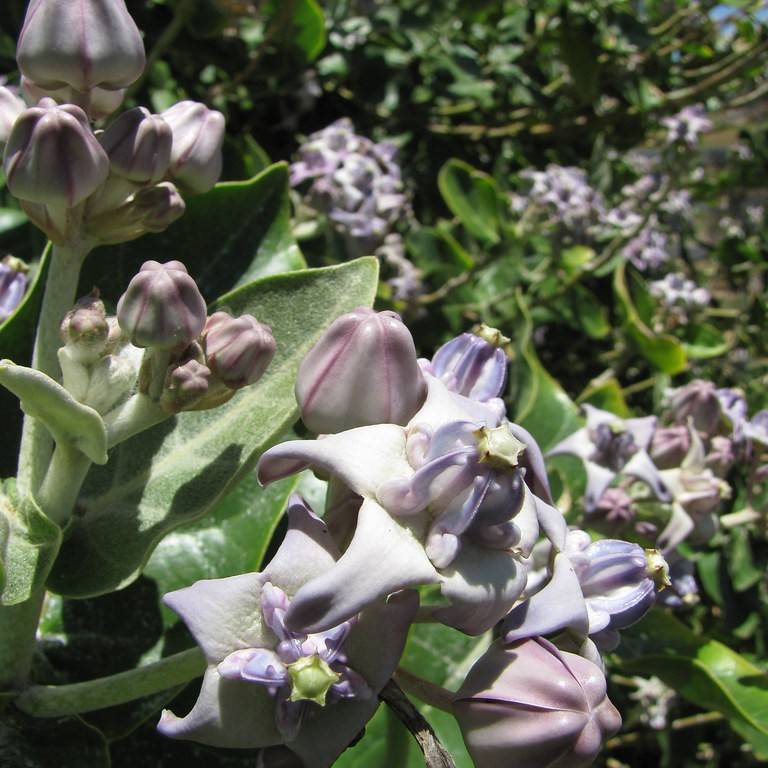
giant milkweed
Calotropis gigantea
Overview
Giant Milkweed (Calotropis gigantea) is a truly astonishing species. Growing up to 20 feet tall, this plant has deep purple flowers with a distinctive star-like center. Its large, lobed foliage provides a striking addition to your garden. Its beauty is further enhanced by a subtle fragrance that blossoms from its blooms. The plant is a hardy species that is relatively drought tolerant and therefore an ideal choice for gardeners looking for a low-maintenance plant. Not only is it stunning, but it is also incredibly useful as its roots, leaves, and flowers have medicinal and therapeutic properties that can be used in a variety of ways. Giant Milkweed really is an amazing species that will bring life and beauty to any garden.
Care Guide
Watering
Watering for a giant milkweed plant should be done 2-3 times per week with a sprinkle or light shower of water. Make sure the soil is moist but not saturated. In summer months, the plant may need a bit more water. During winter months reduce the watering somewhat, but still maintain a constant level of moisture in the soil. When possible, use a drip irrigation system or soaker hoses to deliver water to the roots of the plant, instead of applying water directly to the leaves.
Light
Giant milkweed (Calotropis gigantea) prefers full or partial sun, usually receiving 5 to 6 hours of direct sunlight each day. When growing in partial shade, the plant tends to be more sparse and leggy. When provided with adequate sunlight, this species produces large, heart-shaped leaves and showy clusters of white and purple flowers. For best growth and flowering, irrigate deeply but infrequently. During the warmer months, water the plant about once or twice a week, although this will depend upon local weather conditions and the type of soil it is planted in.
Temperature
Hardiness zone 11-12.
Pruning
Giant milkweed (Calotropis gigantea) should be pruned at least twice a year. The best time to prune this species of plant is in late spring and late summer. In the late spring, prune back dead, damaged, and diseased growth. This will help promote healthy growth and blooming during the summer. This may involve cutting the plant back by up to half its size. In the late summer, prune the plant back lightly to promote growth and flowering for the upcoming season. This will involve cutting back up to a quarter of the size. It is important to avoid over-pruning this species of milkweed, as it may reduce flowering significantly. When pruning, be sure to use clean, sharp shears or loppers as this will help promote healthy growth and prevent infection.
Propagation
Seed Propagation, Cutting, Division, Layering Propagation
Uses & Symbolism
Attracts: Butterflies.
Related plants
Other plants you might like if you grow giant milkweed.