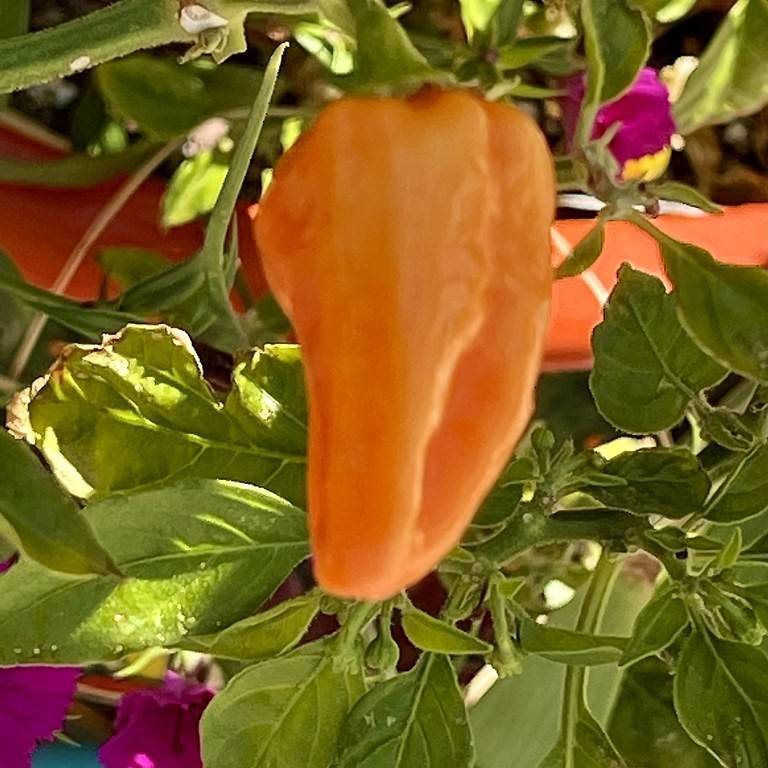
habanero pepper
Capsicum chinense 'Roulette'
Overview
Habanero pepper is an amazing plant species, easily recognizable by its small, lantern-shaped fruits. The heat of these peppers varies, but they are commonly rated at 200,000-300,000 Scoville Heat Units, making them one of the hottest peppers available. It has a unique flavor that can be likened to a combination of fruit and heat, without the overpowering bitterness that some other peppers possess. The benefits of Habanero pepper are numerous, from aiding in digestion to eliminating nasal congestion. Its intense heat has even been shown to increase endorphin levels in the body, resulting in a feeling of euphoria in some people! Whether eaten raw, cooked, or used to spice up your favorite dishes, Habanero pepper will add a delicious dose of heat to any meal.
Care Guide
Watering
Habanero pepper plants prefer evenly moist soil, so it is important to water them frequently and consistently. Water regularly, providing at least 1 inch of water a week that soaks deeply into the soil. During particularly hot periods, you may need to water more often. If possible, water in the morning for best results. As the plants approach maturity, you may need to decrease the amount of water you give the plants as too much water can reduce the flavor of the peppers.
Light
Habanero pepper plants require a minimum of 6 to 8 hours of direct sunlight each day, with as much sun as possible being preferable. Due to their sensitivity to cool temperatures and shade, they should never be grown in partial shade. Habanero peppers should be planted in late spring or early summer when the sun is the strongest and temperatures are consistently warm.
Temperature
Hardiness zone 2-11.
Pruning
Habanero peppers should be pruned regularly throughout the growing season. This will help ensure a larger crop of peppers in the fall. Pruning should begin once the peppers become established and begin to develop a few branches. Start by removing any dead or diseased branches. Then, thin out any overcrowded branches to allow for better air circulation. Once the plants reach about 6 inches tall, you can pinch out the growing tips, as this will encourage lateral, bushier growth and more peppers. In addition, when flowering begins, you can also pinch off the flowers, or small fruits, from the ends of each branch. This will help to ensure that the plant puts energy into producing larger peppers instead of smaller, immature ones.
Propagation
Seed Propagation, Cutting, Layering Propagation, Grafting Propagation, Division
Related plants
Other plants you might like if you grow habanero pepper.