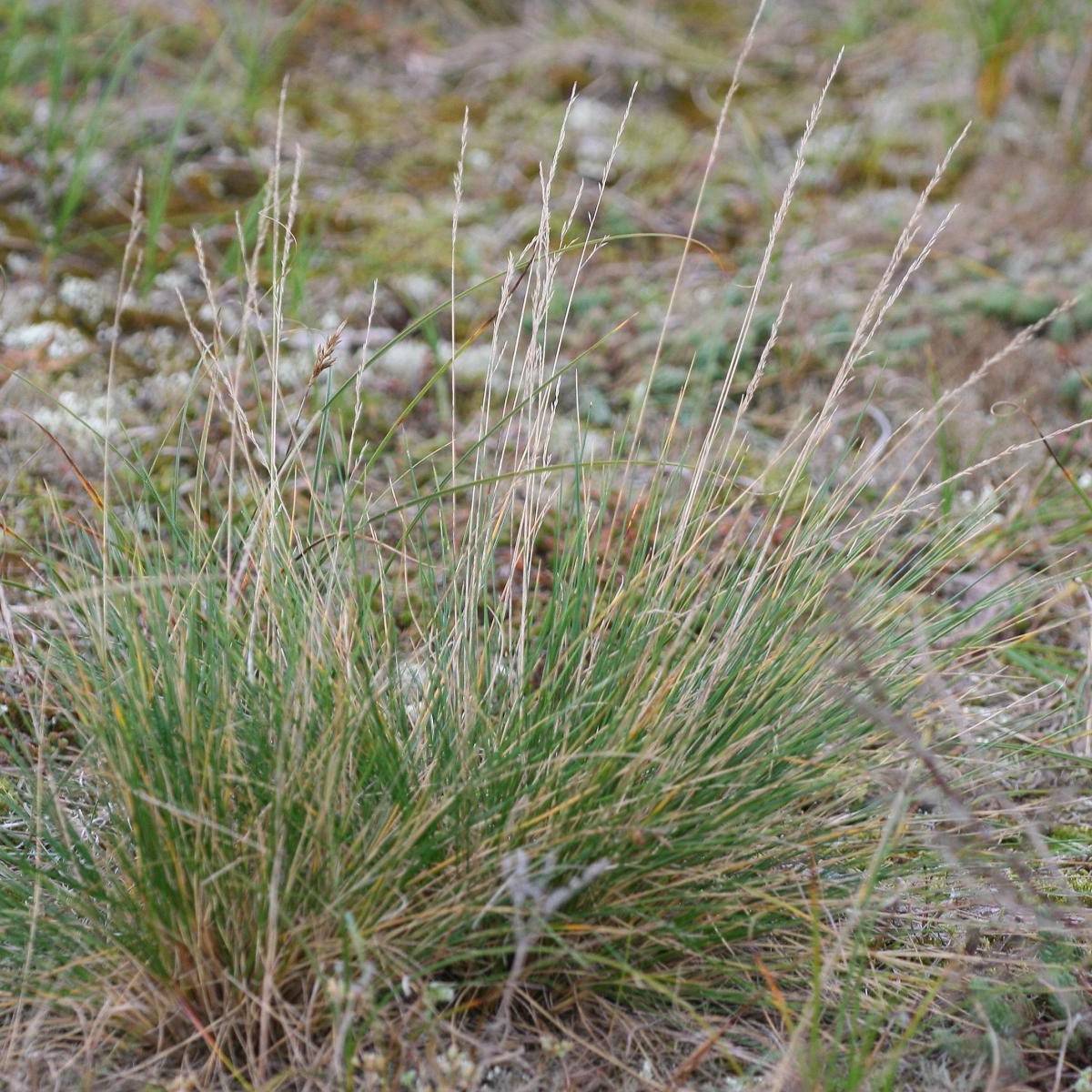
hard fescue
Festuca longifolia
Overview
Hard fescue (Festuca longifolia) is an amazing plant species due to its incredible drought tolerance, heat resilience, and hardiness. It can survive in a wide range of soil textures and pH levels and has an extensive root system that increases its drought tolerance. It can tolerate both full sun and partial shade, as well as cold winters and hot summers. Infertile and dry soils don’t stop it because it is able to draw nutrition and water from deep in the ground. This makes it an ideal choice for erosion and dry areas that have difficulty maintaining other plants. Hard fescue is an incredible plant species that is able to thrive in extreme conditions.
Care Guide
Watering
Hard fescue should be watered when the top 1-2 inches of soil is dry. Avoid overwatering, as this can lead to root rot in hard fescue plants. The amount of water to provide depends on the weather conditions; a mature hard fescue plant should receive up to 1 inch of water per week in hot, dry weather. Water less often in cooler weather or if there is frequent rain. Avoid standing water, as it can cause fungal diseases. Too much watering also leaves less water available to the roots of the plant.
Light
Hard fescue (Festuca longifolia) prefers bright sunlight throughout the day, but it can tolerate some light shade in the afternoon. For optimal growth, it should receive at least 6 hours of direct sunlight each day. When grown in shady areas, it tends to become spindly and weak. Hard fescue is best suited to full sun but can tolerate some part shade. The plants will need most of their sunlight in the early part of the day when the sun’s rays are the strongest, as this will help kick off the photosynthesis process and get the plant ready for the rest of the day. The optimal sunlight requirement for hard fescue is around 8 hours of direct sunlight daily.
Temperature
Hardiness zone 3-9.
Pruning
Hard fescue (Festuca longifolia) should be pruned in late summer or early fall, when the weather has cooled. It should be pruned no more than 1-third of the existing foliage at 1 time. This will help to maintain a healthy, vigorous growth and will prevent the plant from becoming too dense. To prevent tip-dieback, it is best to prune the growing tips of the plant first followed by pruning the lower stems. Pruning hard fescue should be done with sharp pruning shears and is best done in stages rather than taking a large amount off at once.
Propagation
Seed Propagation, Vegetative Plugging, Division, Stolon
Related plants
Other plants you might like if you grow hard fescue.