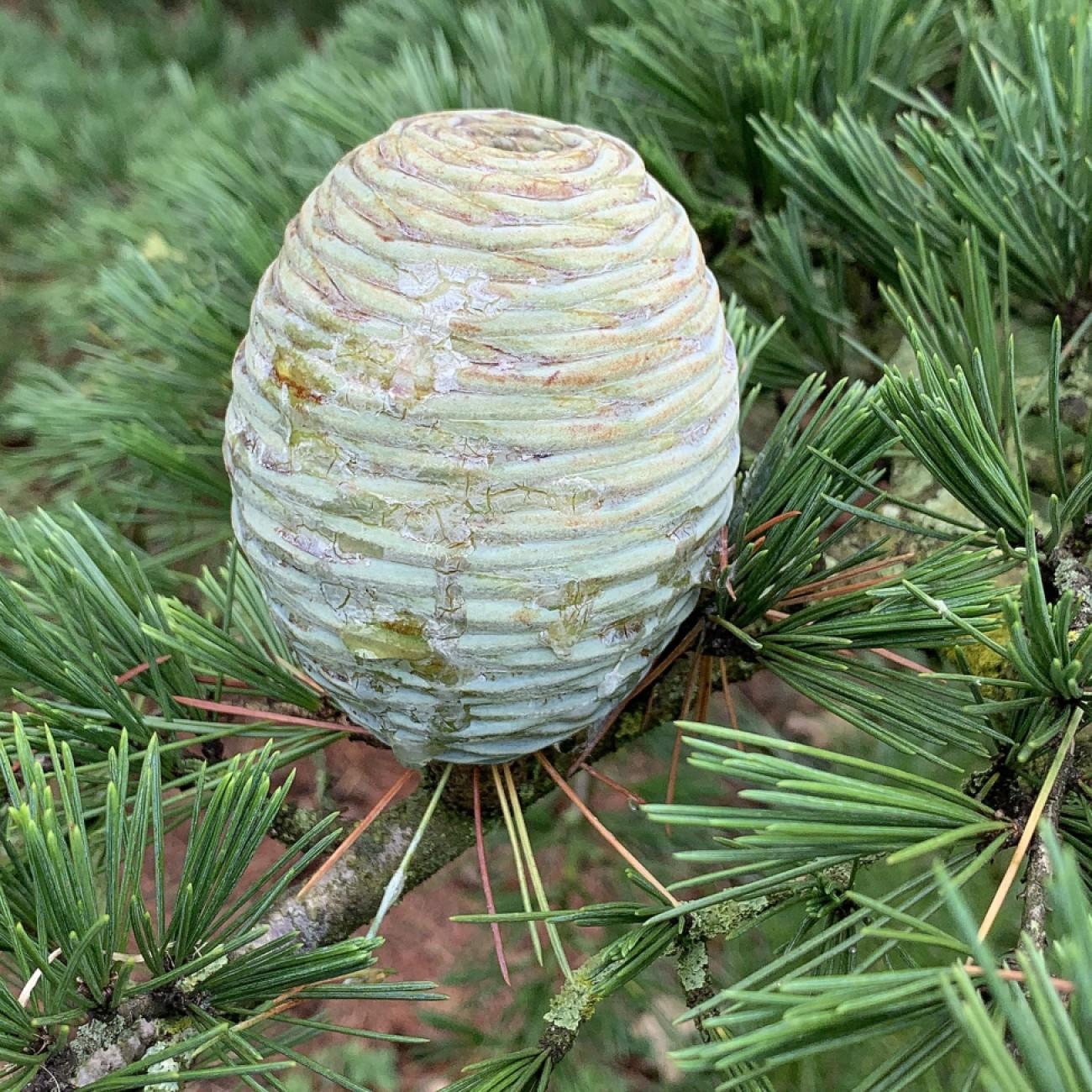
Himalayan cedar
Cedrus deodara 'Shalimar'
Overview
The majestic Himalayan Cedar (Cedrus deodara 'Shalimar') is an evergreen conifer with striking features that make it stand out in any landscape. Its wide, fan-shaped branches are covered in a silvery-green foliage and fragrant needles that make it a perfect specimen tree for any yard. It also features an attractive, reddish-brown bark and can reach a majestic height of 50 feet. Its upright shape and range of sizes make it easy to fit into any garden or landscape, while its graceful beauty, majestic stature, and strong resilience make it a treasure of any outdoor area.
Care Guide
Watering
Himalayan Cedar (Cedrus deodara 'Shalimar') requires thorough watering throughout the growing season. The best time to water is early in the morning, to give the water time to penetrate the roots before the sun rises. Water the soil until it is just barely moist at all times – never soggy or saturated. During particularly hot summer days, you may need to water twice a day - once in the morning and once in the evening. You should also mist the foliage once a day to keep it hydrated. In the winter, when the plant is dormant, it will require much less water; only water occasionally to keep the soil moist.
Light
Himalayan Cedar (Cedrus deodara 'Shalimar') plants thrive best in full sun. A minimum of 6 hours of direct sunlight in the summertime is best for healthy growth in this plant species. For optimal growth and optimal flowering, exposure to direct sunlight for 8 to 12 hours daily when located in USDA plant hardiness zones 6 to 8 is recommended. In colder climates, it is important to avoid full afternoon sun to minimize the possibility of cold damage to the delicate foliage. In areas with milder winters, full sunlight is preferred.
Temperature
Hardiness zone 6-8.
Pruning
Himalayan cedar (Cedrus deodara 'Shalimar') can be pruned at any time during the growing season. However, the best time to prune is during early spring prior to the new growth. It is not necessary to prune heavily, as this can cause weak growth. Removing dead or broken branches is recommended, as well as thinning out congested interior branches to increase air flow and light penetration. Make sure to use sharp pruning shears or lopping shears to achieve a clean cut.
Propagation
Air Layering Propagation, Grafting Propagation, Cutting, Seed Propagation
Related plants
Other plants you might like if you grow Himalayan cedar.







