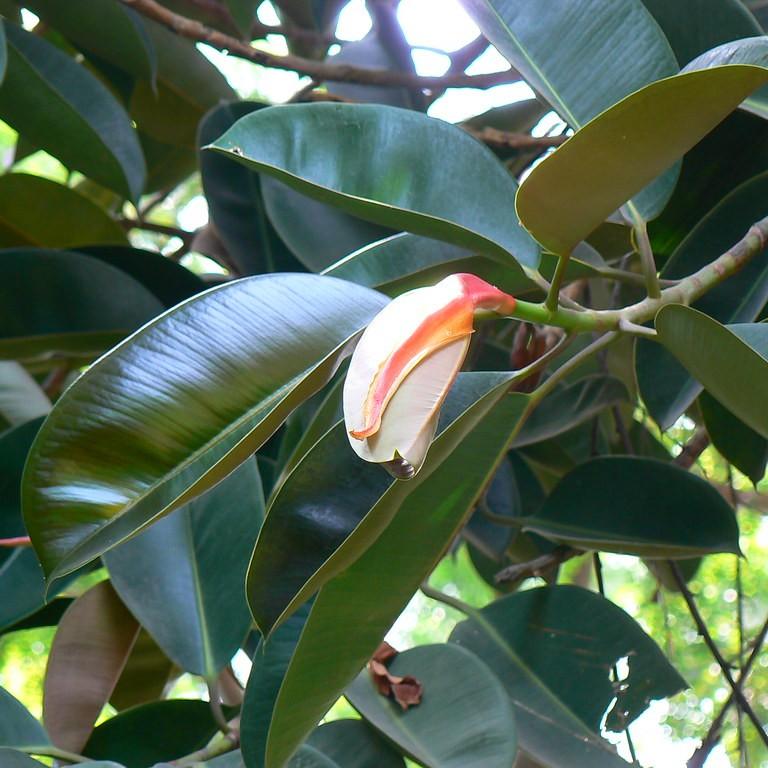
Indian rubberplant
Ficus elastica
Overview
The Indian Rubberplant, or Ficus elastica, is an amazing species for houseplant lovers looking for a dramatic statement piece. It has glossy, broad leaves with a deep green hue, and its dramatic size and shape make it an eye-catching addition to any room. Its air-purifying properties also make it a great addition to a plant-filled home. Its tolerance for lower light and easier maintenance make it an ideal choice for those new to houseplants. With proper care, its large leaves can reach a width of up to 12 inches, adding a truly statement piece to any room.
Care Guide
Watering
Indian rubberplant (Ficus elastica) should be watered thoroughly until the excess water has drained out of the bottom of the container. Allow the top inch or 2 of soil to dry out before watering again. This plant does not like to sit in water, so it is important to avoid over-watering. During the active growing season, water every 7 to 10 days; during the dormancy period, water every 2 to 4 weeks.
Light
Indian rubberplants, also known as Ficus elastica, thrive best in bright light, such as near a window that receives several hours of direct sunlight a day. To provide your plant with optimal levels of sunlight, try to keep its leaves in the sun for 12 to 16 hours a day. If you live in an area with plenty of bright, direct sunlight, you may want to place the plant outdoors for a few hours each day during the warmer months. During winter when sunlight levels are lower, you may consider investing in a supplemental light source such as a high-Wattage LED grow light to provide the necessary light for your plant species.
Soil
Humus rich, Well-drained
Temperature
Hardiness zone 10-12.
Pruning
Pruning an Indian rubberplant should be done about once a year, in late winter or early spring. The plant should be pruned to keep it in shape and size. Pruning can also be done to enhance the growth of new leaves or to remove lower branches that have grown too long. When pruning, remove no more than 1/3 of the total foliage. Be aware of where the cuts are made to avoid harming vital parts of the plant. Make sure to use sharp, clean scissors or garden shears.
Propagation
Layering Propagation, Stem Propagation
Diseases & Pests
Common pests: Fungal leaf spot, Scale insects.
Related plants
Other plants you might like if you grow Indian rubberplant.