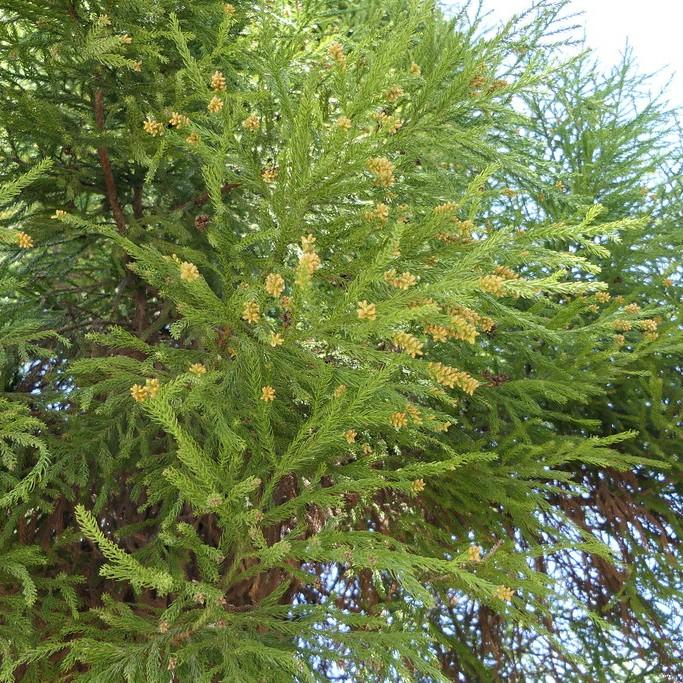
Japanese Cedar
Cryptomeria japonica
Overview
Japanese Cedar is an amazing plant species, native to Japan and other parts of East Asia. This evergreen tree is widely known for its ability to tolerate cold temperatures and its fast growth rate, reaching heights of up to 135 feet. Its traditional dark green needles are often curved, giving it an elegant and sophisticated look. Japanese Cedar has a light, aromatic smell and its wood is widely used for making furniture, internal structures, and carvings. Not only is Japanese Cedar a beautiful sight both in the wild and in gardens, but it is also a multipurpose, easy to care for tree that can be a great choice for ornamental landscaping. Its year round color and stunning silhouette make it a truly amazing plant species.
Care Guide
Watering
Japanese Cedar should be watered thoroughly once a week, allowing the soil to become almost dry before watering again. During the growing season, water more often and make sure there is no standing water around the roots. During the dormant season, it only needs to be watered lightly every couple of weeks.
Light
Japanese Cedar (Cryptomeria japonica) typically requires full sun to achieve its best growth. At least 6-8 hours of sun exposure per day is recommended for optimal growth and health of the tree.
Soil
Acidic, Humus rich, Well-drained
Temperature
Hardiness zone 7-7.
Pruning
When it comes to pruning Japanese Cedar, it is generally best to prune during the winter months. This allows the plant to remain healthy and grow back strong when the spring months roll around. During pruning, it is important to take off only as much as is necessary to maintain the desired shape and size. Avoid taking off large amounts of foliage or large lateral branches as this can cause trauma to the plant or lead to a weakened, less attractive form.
Propagation
Seed Propagation, Cutting
Diseases & Pests
Common pests: Pest resistant, Rabbit resistant.
Related plants
Other plants you might like if you grow Japanese Cedar.