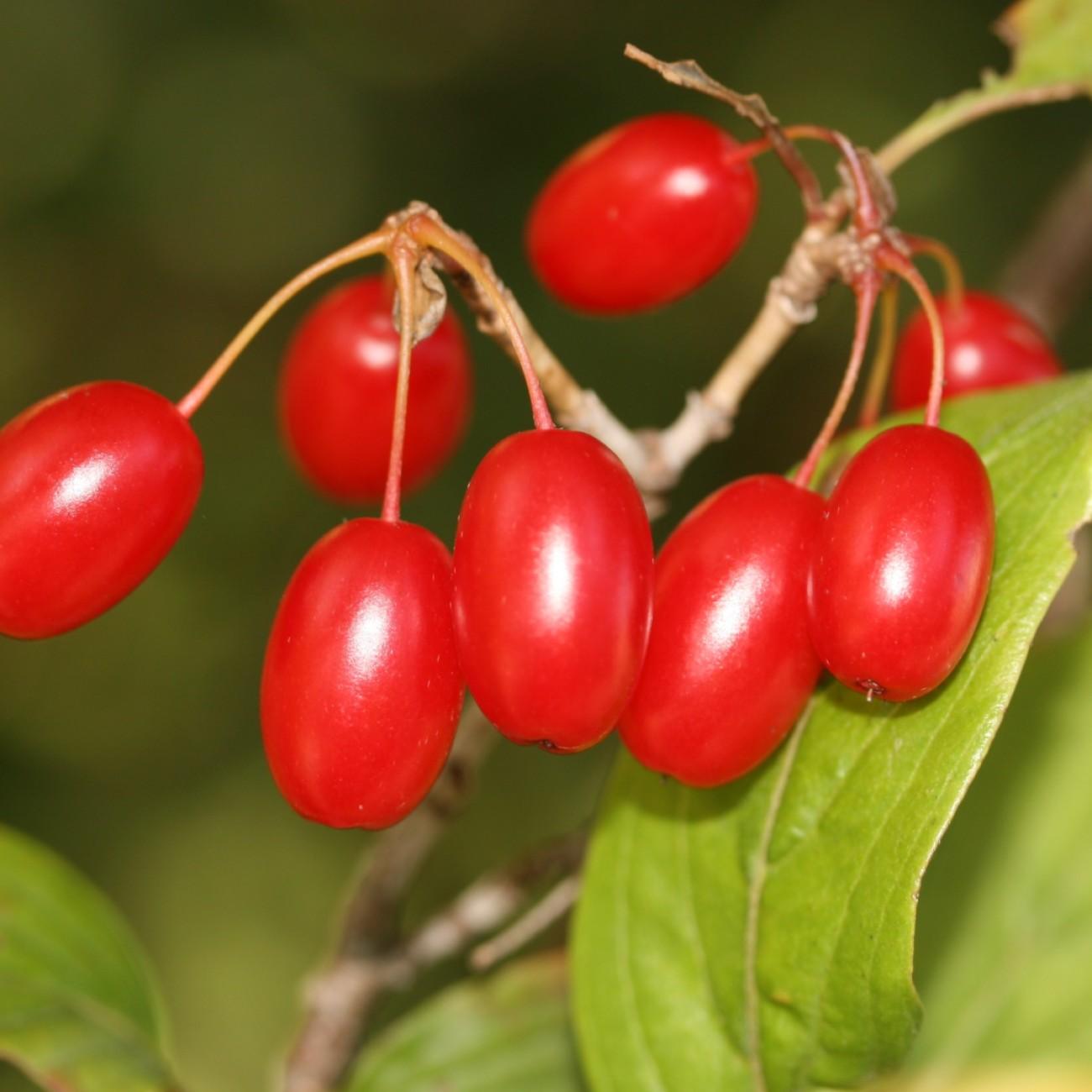
Japanese cornelian cherry
Cornus officinalis
Overview
Japanese cornelian cherry (Cornus officinalis) is an amazing species for any garden. Its aromatic white and yellow flowers bloom in early spring, providing an exquisite view. This species is also a great pollinator - the birds and bees that come by are attracted by its unique color and fragrance. In late summer, the plant produces small, edible red cherries that have a tart yet subtly sweet flavor. Beyond its ornamental and food benefits, the Japanese cornelian cherry tree is also highly adaptive to a variety of climates, making it a resilient species for any gardener.
Care Guide
Watering
Japanese cornelian cherry should be watered deeply to saturate the soil; aim for 1-2 inches of rainwater, or its equivalent in irrigation, per week. During hot periods, or when the soil is light or sandy, a deeper watering once or twice a week should be applied. The soil should be allowed to dry out slightly between waterings. Avoid overwatering, which can cause the roots to rot.
Light
Japanese cornelian cherry needs full sunlight all year round to thrive. In summer, it should get full sun for at least 8-10 hours a day. In winter, it needs some protection from wind and frost, so choose a sheltered spot for planting. It’s important to ensure that Japanese cornelian cherry is getting enough sunlight during its growth period. It can tolerate shade, but should get full sun for 6-8 hours a day for optimal growth and health. In more northern parts of the US, it is best to give the plant indirect sunlight or a shaded spot during the hottest hours of the day.
Temperature
Hardiness zone 5-8.
Pruning
Pruning should be done twice a year for Japanese cornelian cherry (Cornus officinalis). In late winter or early spring, prune away crossing or dead branches. Then in late winter/early spring again, prune for shape and size. Be careful when pruning, as Japanese cornelian cherry does not respond well to hard pruning. If you need to reduce the size of the shrub significantly, it is best to do so over a period of years by gradually removing the larger branches.
Propagation
Grafting Propagation, Layering Propagation, Cutting, Seed Propagation
Uses & Symbolism
Attracts: Birds.
Related plants
Other plants you might like if you grow Japanese cornelian cherry.