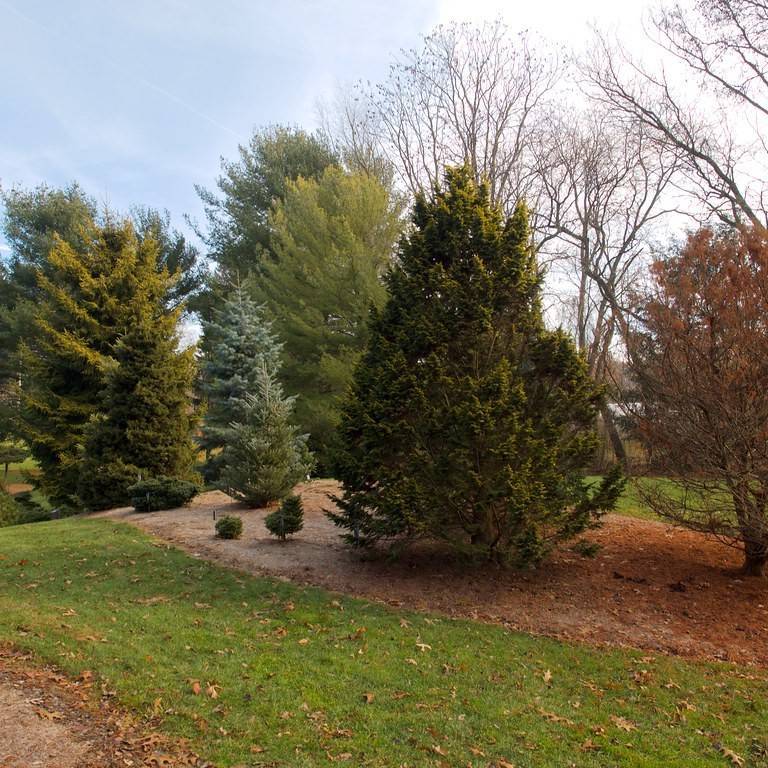
Japanese falsecypress
Chamaecyparis pisifera 'Aurea Pendula'
Overview
The Japanese falsecypress (Chamaecyparis pisifera 'Aurea Pendula') is an amazing and stunning conifer. Its bright golden-yellow, needle-like foliage cascades elegantly from weeping branches, creating a beautiful weeping effect. Its unique shape and color make it an interesting and attractive feature to any garden. Not only does it make a great conversation starter, this species is hardy and resilient, thriving in rough conditions and soil types. It’s tolerant of sun or shade, making it a versatile and robust choice. With minimal maintenance, The Japanese falsecypress 'Aurea Pendula' is sure to bring stunning beauty to any garden.
Care Guide
Watering
For Japanese Falsecypress, water when the topsoil feels dry to the touch, about 2-3 inches deep into the soil. During active growth (spring and summer), it's good to water once a week or so, more if weather is particularly hot and dry. During the winter, watering may not be necessary, depending on the amount of rainfall. The key is to make sure the soil is not overly wet or dry. In moist climates, water less often, but in dry climates, the plant may need to be watered more frequently.
Light
Japanese falsecypress (Chamaecyparis pisifera 'Aurea Pendula') prefers full sun to partial shade. It should receive at least 4-6 hours of direct sunlight each day. During warmer months, the plant should be placed in a spot with a bit of shade to prevent leaf scorching, while during cooler months it needs more direct sunlight to thrive. When possible, place the plant where it will receive the morning sun, as this provides the most beneficial light for photosynthesis.
Temperature
Hardiness zone 4-4.
Pruning
Japanese falsecypress (Chamaecyparis pisifera 'Aurea Pendula') should be pruned in late winter or early spring, when the tree is still dormant. Pruning should generally be light to ensure the plant maintains its natural shape and size, and only dead, damaged, or overgrown branches should be removed. To promote a graceful cascading form, tip prune the longest branches to encourage secondary growth. Overall, prune only as much as is needed to maintain its desired form, limiting pruning to no more than 1/3 of the foliage each year.
Propagation
Cutting, Grafting Propagation, Layering Propagation, Air Layering Propagation, Division
Diseases & Pests
Common pests: Pest resistant, Disease resistant.
Related plants
Other plants you might like if you grow Japanese falsecypress.