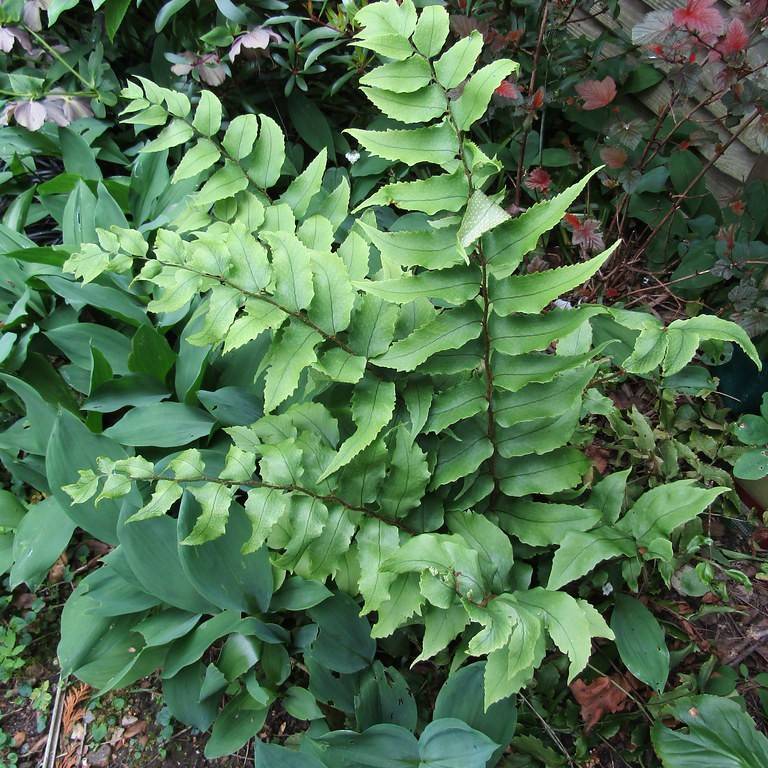
Japanese holly fern
Cyrtomium falcatum
Overview
The Japanese holly fern (Cyrtomium falcatum) is truly amazing. Featuring intoxicating, glossy green fronds, this captivating species is an ideal addition to any home or garden. It's also incredibly hardy, with a wide range of growing requirements, and needs less water compared to other varieties. This plant has a gorgeous symmetry in form and is easy to care for, which makes it an ideal plant for even gardening beginners. Plus, it does well in lower light environments thanks to its ability to photosynthesize even without full sunlight. With no special requirements, the Japanese holly fern is the perfect choice for creating an impressive urban display.
Care Guide
Watering
For Japanese holly ferns, it is important to keep the soil evenly moist, but not soggy or waterlogged. Water about 2-3 times a week, using lukewarm, pH-neutral water and allow the excess to drain properly. During the summer and warmer months, you may need to water more often. During cooler months, water less often. Signs of under- or over-watering can include yellowing leaves or wilting. Check the soil around the roots for moisture before watering and adjust accordingly.
Light
The Japanese holly fern (Cyrtomium falcatum) requires partial to full shade, so it should be placed away from direct sunlight. The ideal light exposure for this plant species is approximately 1-3 hours of indirect sunlight per day, preferably in the morning. This will help give the fern the important energy needed to thrive and maintain its lush and vibrant foliage. The Japanese holly fern should not be exposed to direct sunlight as it can burn the foliage and stunts the growth of the plant.
Soil
Alkaline, Humus rich, Well-drained
Temperature
Hardiness zone 6-10.
Pruning
Pruning Japanese holly fern (Cyrtomium falcatum) should take place several times a year. In the spring, pruning should be done just after new growth appears. It is important to cut back any dead leaves or fronds, as well as any new growth that becomes overcrowded or malformed. Summer pruning is done to keep the fern looking tidy and to help it grow in a shapely manner. For this step, remove any browning leaves, any fronds that cross over each other, and any that have become too long or crowded. Finally, in the fall, carefully remove any dead growth that has built up over the summer. Prune lightly, as too much pruning will encourage new growth that may not survive through the winter.
Propagation
Spore Propagation
Diseases & Pests
Common pests: Deer resistant.
Related plants
Other plants you might like if you grow Japanese holly fern.