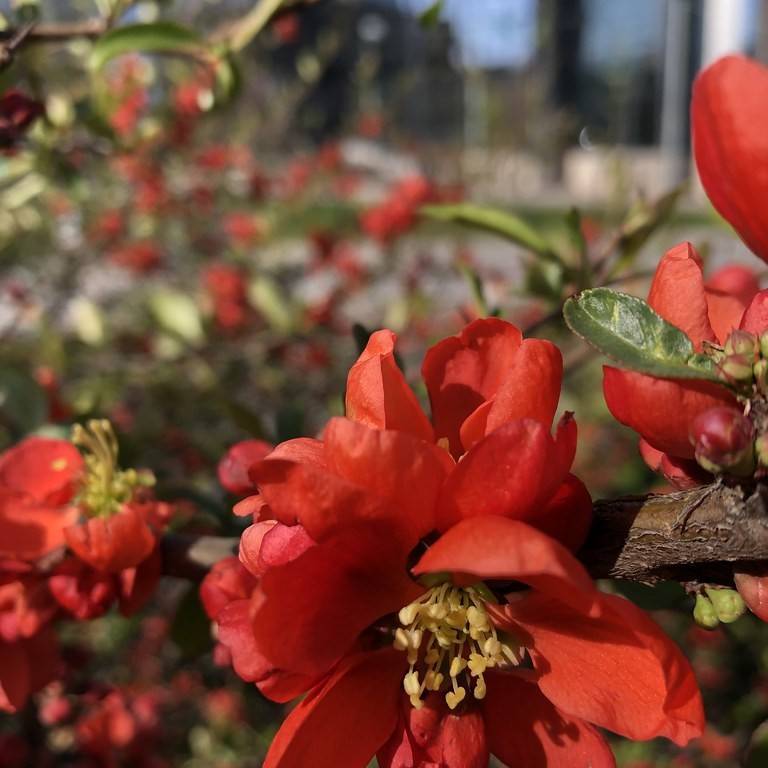
Japanese quince
Chaenomeles japonica
Overview
Japanese quince (Chaenomeles japonica) is a stunningly vibrant deciduous shrub that blooms in showy clusters of pink or Hawaiian orange flowers in late winter or early spring. Highly fragrant, the flowers are a bushy contrast to the glossy, attractive foliage. Japanese quince is incredibly resilient and can thrive in a wide range of soil and climate conditions. Once established, it is very low maintenance, requiring rarely any pruning. As a bonus, its fruits are also edible. Japanese quince is a beautiful, versatile shrub that will bring life to any garden!
Care Guide
Watering
Japanese quince should be watered often and deeply. They thrive in moist, well-drained soil which is kept consistently precipitated. Water as soon as the top inch of soil dries out, usually every 5-7 days. However, the frequency of watering can vary depending on weather conditions. In hotter, drier climates, Japanese quince may need to be watered more often.
Light
Japanese quince (Chaenomeles japonica) prefers full sun for 6-8 hours per day. It will flower best when grown in the sunniest available location, especially in areas with shorter days and cooler temperatures. During the peak of summer, Japanese quince may benefit from some afternoon shade, but for the best results, consistent bright light should be provided throughout the growing season.
Temperature
Hardiness zone 5-9.
Pruning
Japanese quince should be pruned in late winter when the plant is still dormant. The best way to prune Japanese quince is to do light pruning on the younger shoots each year, removing only a few inches of the tips. This helps keep the plant from becoming overgrown, and encourages branching and more flowering. If the shrub has become overgrown, it can be lightly pruned in the early spring. Care should be taken not to remove too much of the growth or cut into the older wood as this can damage the plant or kill it.
Propagation
Grafting Propagation, Layering Propagation, Cutting, Seed Propagation
Related plants
Other plants you might like if you grow Japanese quince.







