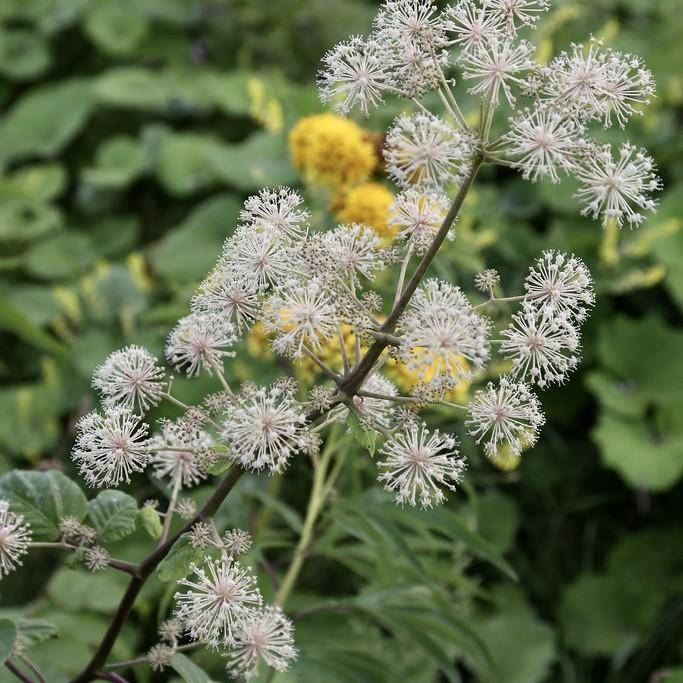
Japanese spikenard
Aralia cordata
Overview
Japanese spikenard, also known as Aralia cordata, is an incredible and ornamental species of plant with many amazing qualities. It has bright white and yellow "umbels" of flowers that serve as a great source of bee and butterfly food. It is also has a deep and pleasant root aroma, making it an excellent addition to your herb garden. The root has been used for centuries for medicinal purposes such as treating skin inflammation, digestive issues, and lung diseases. This plant is low-maintenance, with no particular soil requirement, and can even tolerate brief periods of inundation. Japanese spikenard is a great choice for anyone looking for a diverse and beautiful addition to their outdoor space.
Care Guide
Watering
Japanese spikenard is a species that requires moist soil in order to thrive; its water requirements are therefore quite high. Generally, it is recommended to water this plant every 1-2 days during the growing season and every 3-4 days during the winter when the growth rate is slower. Make sure that the soil remains evenly moist but never soggy. If the leaves look wilted, mulch around the plant to help retain moisture. It is also important to note that Japanese spikenard does not like to dry out, so be sure to check the soil moisture levels daily and water as needed to prevent wilting.
Light
Japanese spikenard is a sun-loving plant and requires full sunlight for at least 6 hours a day. It prefers a sunny but sheltered location in the garden where it is likely to get the most sunshine during the cooler part of the day. The ideal light intensity should range from moderate to high. During the summer months, Japanese spikenard needs to be shaded from the strongest midday sun, otherwise the foliage may burn. In wintertime when the sun is weaker, it may even need some additional light to thrive.
Temperature
Hardiness zone 4-8.
Pruning
Japanese spikenard (Aralia cordata) should be pruned in late winter or early spring before it puts on new growth. Pruning should be done to maintain shape and size, as well as to remove dead or damaged branches. Deadheading is not necessary as the flowers are insignificant. When pruning, it's best to remove no more than 1-quarter of the tallest branches. It's safe to cut right back to the trunk if needed, as this species has a tendency to sprout from the base. This can help keep the plant looking neat and balanced.
Propagation
Cutting, Layering Propagation, Division, Seed Propagation
Uses & Symbolism
Attracts: Birds.
Related plants
Other plants you might like if you grow Japanese spikenard.







