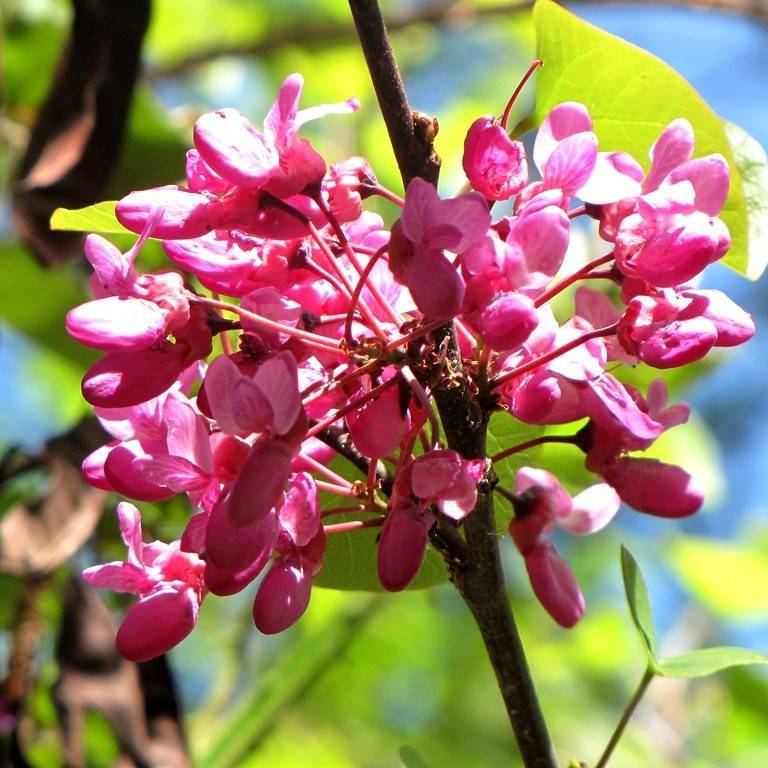
Judas tree
Cercis siliquastrum
Overview
The Judas tree is an amazing species of flowering tree that has a unique beauty and history. It is native to parts of Asia, the Middle East, and the Mediterranean region. Its flowers have bright pink or white petals, which bloom in the spring and bring life to any landscape. The tree is also known for its ability to survive in harsh conditions, making it a valuable ornamental species in dry climates. Its name originates from the biblical story of Judas Iscariot, and it is said that the tree's pink flowers were the same colour of the money Judas was given for betraying Jesus. Overall, the Judas tree is a remarkable species with a fascinating cultural history.
Care Guide
Watering
When watering your Judas tree, it is important to keep in mind that it prefers moist soil, but not overly wet soil. During the first year of growth, water the tree deeply and regularly, ensuring that the soil is evenly moist throughout the growing season. During the second year of growth, continue to water deeply, but reduce watering frequency. After the third year of growth, water your Judas tree only when the soil becomes dry - 1 to 2 inches (2.5 to 5 cm) down. This could be anything from once a week to every 2 weeks, depending on local weather conditions. With established trees, deep watering in summer is best. Watering at the base of the tree is most effective; avoid overhead watering, as it will encourage disease. Winter watering should be avoided.
Light
Judas tree (Cercis siliquastrum) prefers full sun and minimum 6 hours of direct sunlight a day. It does best in a location that faces south, east or southeast, with dappled sunlight throughout the day. In its native Mediterranean habitats, it is accustomed to long, hot summers, so too much shade can have a negative effect on flower production and general vigor. Too much shade can also invite fungal diseases such as powdery mildew and rust. In regions with intense summers, afternoon shade may be necessary to keep the tree from drying out.
Temperature
Hardiness zone 6-9.
Pruning
Judas tree (Cercis siliquastrum) should be pruned in late winter or early spring. Prune off dead or damaged branches first, and then shape the tree as desired. Judas tree can tolerate heavier pruning than other species, however, only a light pruning is recommended. Remove about 1/3 of the largest or oldest branches back to the trunk, as well as any branches growing on the underside of the canopy.
Propagation
Air Layering Propagation, Grafting Propagation, Cutting, Seed Propagation
Uses & Symbolism
Attracts: Butterflies.
Related plants
Other plants you might like if you grow Judas tree.