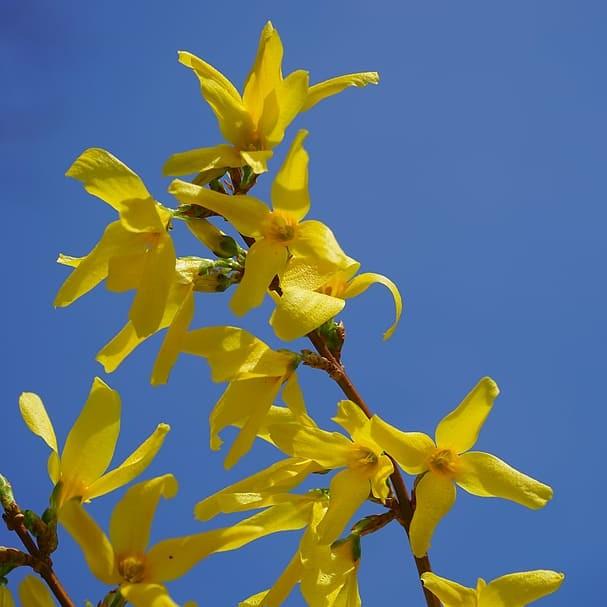
Korean forsythia
Forsythia ovata
Overview
Korean forsythia is one of the most impressive flowering shrubs, providing a stunning display of bright yellow blossoms in the springtime. Unlike other shrubs, it blooms for an extended period of time, sometimes more than a month. It is relatively undemanding and easy to manage, especially since it requires little pruning. Its vibrant flowers are highly attractive to birds and other pollinators. Not only is it an eye-catching ornamental, it also has a range of medicinal benefits, primarily treating respiratory and urinary tract infections. Indeed, Korean forsythia is an ideal choice for a stunning garden feature that packs a punch of beauty and medicinal value.
Care Guide
Watering
Korean forsythia (Forsythia ovata) should be watered regularly during the growing season, which typically lasts through the spring and summer months (March to September). It is important to keep the soil somewhat moist, as these plants do not tolerate overly-wet or overly-dry soils. During the warmer summer months, water approximately twice a week, allowing the top inch or so of soil to dry out between watering. During the cooler spring and autumn months, water about once a week or less depending on the conditions. Make sure to water the bases of the plant to promote healthy root growth.
Light
Korean Forsythia (Forsythia ovata) typically prefers to receive full sunlight, although it can tolerate partial shade. Planting in a location that receives full sunlight—at least 6 hours a day—will help ensure the Korean Forsythia blooms effectively. The light should ideally be dappled sun—direct but not too hot—in the morning or afternoon hours, since the southern exposure during the middle of the day can cause the flower buds burned or set back.
Temperature
Hardiness zone 4-7.
Pruning
Korean forsythia (Forsythia ovata) is best pruned in the late winter months, just before it begins leafing out and blooming. Pruning should involve cutting out dead wood and shaping the shrub if needed. Any pruning cuts should be made right above a pair of leaves or a leaf node. Harder pruning should be limited to about 1-third of the size of the shrub. Be sure to remove any suckers from the base. It is not recommended to prune Korean forsythia earlier than late winter, as it may reduce flowering.
Propagation
Cutting, Layering Propagation, Grafting Propagation, Division, Seed Propagation
Related plants
Other plants you might like if you grow Korean forsythia.