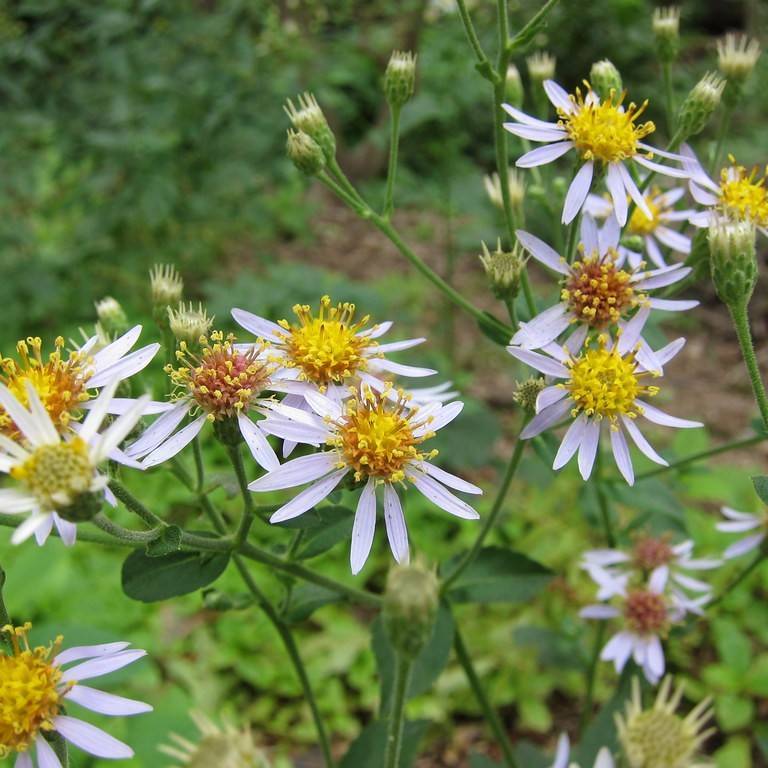
large-leaved aster
Eurybia macrophylla
Overview
The large-leaved aster (Eurybia macrophylla) is an amazing plant species. It has unique, large, glossy, dark green, lobed leaves that create a striking and attractive addition to any garden. Its flowers are bright white or lavender and add to the overall beauty of the plant. This plant is great for attracting butterflies and beneficial pollinators as it produces large quantities of nectar. Additionally, it is a drought-tolerant perennial that is fairly low-maintenance and easy to grow for gardeners of all levels. Its unique characteristics make it an ideal choice as an ornamental plant for landscaping or as an accent for flower beds.
Care Guide
Watering
Large-leaved aster (Eurybia macrophylla) should be watered regularly throughout the growing season. During the heat of summer, it should be watered deeply every other day. In the spring and fall, water it weekly by applying about 1 inch of water. If rainfall is less than an inch a week, you may need to supplement with additional water. During the winter, water the large-leaved aster at most every 2 weeks. In areas prone to drought, deep soak the soil during the winter months. If the soil is dry, add additional amounts of water.
Light
Large-leaved aster (Eurybia macrophylla) thrives in brightly lit to partial shade conditions, preferring at least 3 to 6 hours of sunlight per day. In especially hot climates, the plant may need additional protection from scorching mid-day sun, such as a lightweight fabric or shade cloth. The plant also appreciates some afternoon shade for best results. In cool, temperate climates the plant may tolerate full sun. Watering should be consistent and frequent during the growing season but the plants prefer average soil and light/moderate moisture levels.
Soil
Sandy Loamy
Temperature
Hardiness zone 3-8.
Pruning
The large-leaved aster (Eurybia macrophylla) prefers light pruning throughout the year. Pruning should be done lightly in May and June by removing up to 1-third of the oldest stems. This encourages vertical growth which is beneficial for the plant. In July, prune back the other half of the oldest stems. Doing this will help increase flowering and also give the plant a more natural shape. Finally, in late fall, after the aster has reached its flowering season, deadheading can be done to remove spent blooms and keep the plant looking clean. To ensure healthy growth, avoid pruning more than 1-third of the stem each time. Also, be sure to thoroughly clean and disinfect pruning shears between each pruning session to prevent the spread of disease.
Propagation
Seed Propagation, Division, Cutting, Layering Propagation
Uses & Symbolism
Attracts: Butterflies.
Related plants
Other plants you might like if you grow large-leaved aster.







