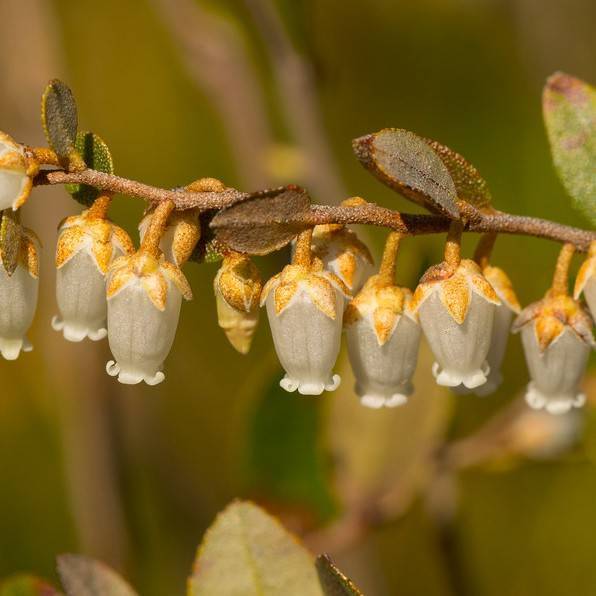
leatherleaf
Chamaedaphne calyculata 'Verdant'
Overview
Leatherleaf (Chamaedaphne calyculata 'Verdant') is an amazing evergreen shrub that is both low-maintenance and attractive. Its leathery evergreen foliage is glossy and deep green, making it a perfect backdrop for other plants and adding structure to any garden. Blooming white flowers in late spring, it also produces delightful, fragrant smells. Accompanied by long-lasting vibrant red berries in the fall, they are attractive to wildlife and make for a beautiful display. Deer and drought-tolerant, it is also easy to grow in almost any soil and is simple to prune. Overall, leatherleaf is no more than impressive and a perfect option for any landscape.
Care Guide
Watering
Leatherleaf (Chamaedaphne calyculata 'Verdant') should be water when the top 2 inches of soil are dry. Water deeply so that the water soaks down to at least 6 inches deep. During the active growth period, usually late spring through mid-fall, water heavily once a week if there is little or no rain. During the winter months when the plant is dormant, water only enough to keep the roots from drying out completely.
Light
Leatherleaf (Chamaedaphne calyculata 'Verdant') thrives in full sun or partial shade. In the northern hemisphere, the ideal amount of sunlight for this plant species is 7-8 hours per day. For optimal growth, the plant should receive direct sunlight during the warmest part of the day, typically mid-morning to mid-afternoon. In the southern hemisphere, the sun is at a more vertical angle in the sky, so it is beneficial to provide shade, especially during the hottest part of the day. Additionally, the plant may need additional protection from the midday sun in hotter climates.
Soil
Sandy, Loamy, Humus
Temperature
Hardiness zone 3-7.
Pruning
Leatherleaf (Chamaedaphne calyculata 'Verdant') should be pruned once a year in late summer or early fall to maintain its desired form and size. Pruning should be done in a way that encourages a dense, bushy growth habit and encourages plenty of new foliage growth. Start by removing any dead branches, unhealthy or broken wood, or old fruit-producing canes that have died back. Old wood should be cut all the way down to the ground if possible. After that, look for any branches that have grown too long or too close to each other and prune as needed. This will help create more air and light penetration within the canopy, which in turn will help to support healthy new growth. Finally, lightly trim back the remaining branches to remove any weak branches or to thin out the plant. Be sure not to over-prune, as this may shock the leatherleaf and could lead to poor outcomes.
Propagation
Cutting, Layering Propagation, Division, Seed Propagation
Related plants
Other plants you might like if you grow leatherleaf.







